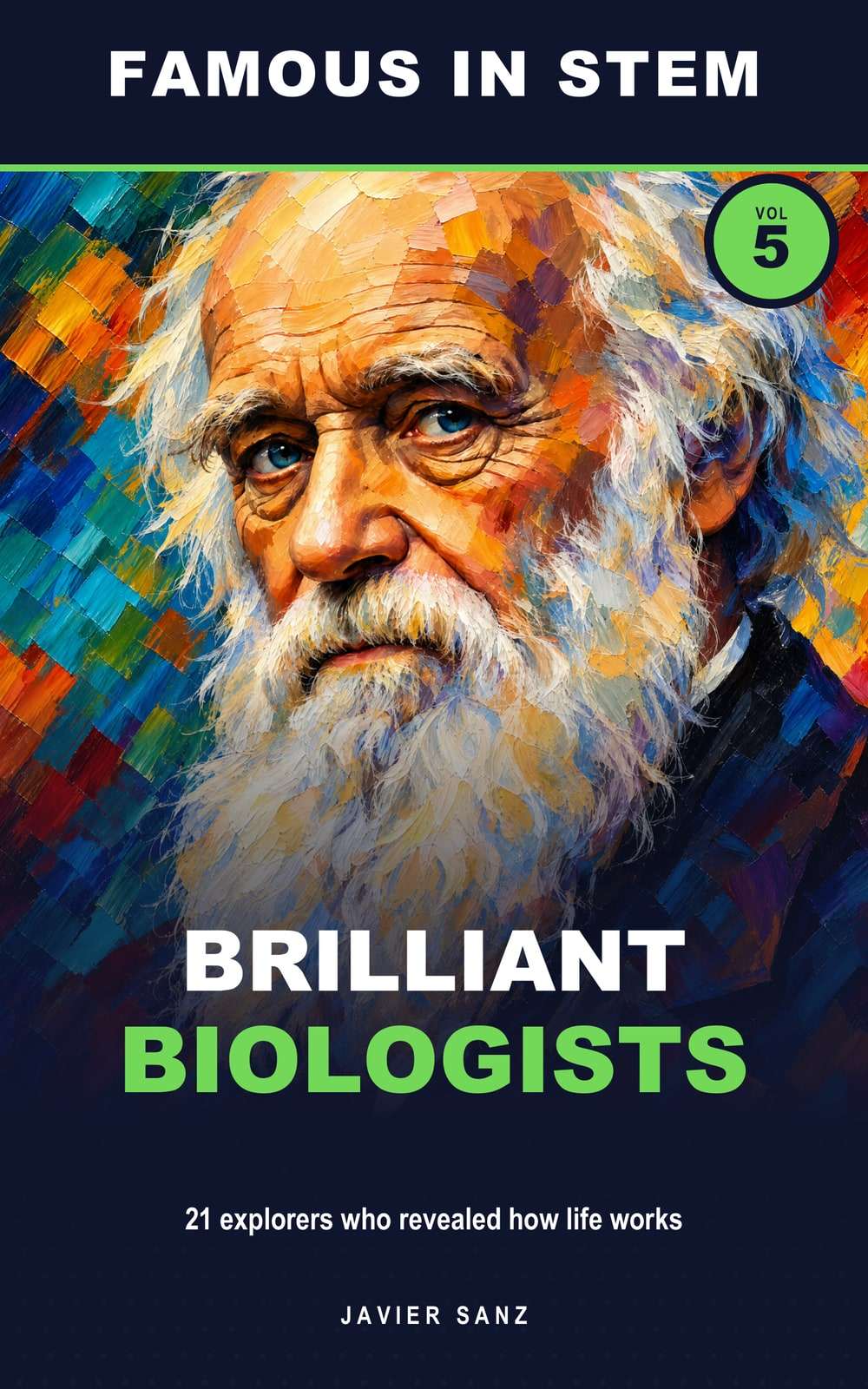
Cover of Famous in STEM, Vol. 5: Brilliant Biologists by Javier Sanz, showing a painted portrait of Charles Darwin

Famous in STEM · Volume 5

Brilliant Biologists

21 explorers who revealed how life works

A naturalist who worked on his great idea for twenty years, telling only a few friends, until a letter arrived from the other side of the world. A young woman crouched in the grass watching a chimpanzee use a tool. A cloth merchant who scraped his own teeth and found a hidden world under his lens. Brilliant Biologists tells the true stories of 21 explorers who revealed how life works, from Darwin and Mendel to Jane Goodall, Rachel Carson and Wangari Maathai.

Also see all formats on Amazon, including hardcover where available.

  • 20 chapters, 21 people
  • Ages 13+
  • Read in any order
  • 2026 edition
  • By Javier Sanz

About this book

Evolution, genes, chimpanzees, ants and the double helix, told through the explorers who revealed how life works.

Each chapter explains one big idea of biology in plain words, from natural selection and genes to food chains and the double helix, with things to notice outside and simple experiments with coins, sugar water and a magnifying glass.

Biology is the science of the one thing you cannot step outside of. You can put down a physics book and stop thinking about gravity. You cannot stop being alive. Right now, while you read this sentence, billions of cells in your body are copying all six billion letters of their DNA, the descendants of bacteria that moved in about two billion years ago are burning sugar to keep you warm, and the oxygen they are using came out of a leaf or a speck of plankton in the sea. The people in this book are the ones who noticed.

From “Before you start,” the book’s introduction

Who’s inside

All 21 biologists, in 20 chapters

Each chapter title and big idea, exactly as they appear in the book.

  1. Charles Darwin

    1809–1882

    Twenty years of silence, then a letter from the tropics

    Big ideaLiving things change over generations because the ones that fit their surroundings best leave the most offspring.

  2. Gregor Mendel

    1822–1884

    The monk who counted about 28,000 pea plants

    Big ideaTraits are passed on in separate units that do not blend, and they follow the rules of chance.

  3. Jane Goodall

    1934–2025

    The secretary who went to live with chimpanzees

    Big ideaChimpanzees make tools, have personalities and pass habits down the generations. The line between us and them is thinner than anyone thought.

  4. Rachel Carson

    1907–1964

    The writer who heard the birds go quiet

    Big ideaA poison sprayed on a field does not stay there. It climbs the food chain and ends up in the eagle, and in you.

  5. Carl Linnaeus

    1707–1778

    The man who gave every living thing two names

    Big ideaSort all of life into nested groups, and give every species one name of two words that works in every language.

  6. Barbara McClintock

    1902–1992

    The woman who watched genes jump in a cornfield

    Big ideaGenes are not nailed to one spot on a chromosome. Some of them move, and when they land they can switch other genes on and off.

  7. Alexander von Humboldt

    1769–1859

    The man who climbed a volcano and saw the whole planet

    Big ideaClimate, soil, plants, animals and people are one connected system. Change one and the others move.

  8. Alfred Russel Wallace

    1823–1913

    The collector who lost everything at sea and started again

    Big ideaWhere an animal lives tells you where it came from. Barriers such as deep water and high mountains divide the living world into regions.

  9. Antonie van Leeuwenhoek

    1632–1723

    The cloth merchant who found a zoo in his own mouth

    Big ideaA drop of water and a scraping from your teeth are full of living things too small to see, and your own blood is full of tiny living cells.

  10. E. O. Wilson

    1929–2021

    The boy with one good eye who learned to speak ant

    Big ideaAn ant colony acts like one animal with thousands of bodies, run by smells. Understanding it tells you how societies work, and why life needs room.

  11. Dian Fossey

    1932–1985

    The woman who lived alone in the mountain forest

    Big ideaGorillas are shy, gentle family animals, and the way to learn about them is to behave like one.

  12. George Washington Carver

    c. 1864–1943

    The plant doctor who taught the South to rest its soil

    Big ideaPeanuts and beans carry bacteria in their roots that pull fertilizer out of the air. Plant them between cotton crops and worn-out land comes back.

  13. Lynn Margulis

    1938–2011

    The biologist who found bacteria living inside you

    Big ideaThe power plants inside your cells were once free-living bacteria. Complex life began when one cell swallowed another and did not digest it.

  14. Thomas Hunt Morgan

    1866–1945

    The skeptic who found a white-eyed fly

    Big ideaGenes sit in a line along chromosomes, and you can map where each one is by breeding fruit flies.

  15. Wangari Maathai

    1940–2011

    The woman whose movement planted tens of millions of trees

    Big ideaForests help hold the soil on slopes and keep rain soaking in. Where they are cut, soil washes away and streams often suffer; planting trees can help bring them back.

  16. David Attenborough

    born 1926

    The man who showed the whole planet to the whole planet

    Big ideaFilm the living world honestly, with the science right and the wonder left in, and people will care what happens to it.

  17. Robert Hooke

    1635–1703

    The man who drew a flea the size of a cat

    Big ideaPut a lens between your eye and the world and there is a second world underneath, full of structure nobody had suspected. He named its building blocks cells.

  18. Mary Anning

    1799–1847

    The girl who dug sea monsters out of a crumbling cliff

    Big ideaThe layers in a cliff are pages of the Earth’s history, and the bones in them belong to animals that no longer exist.

  19. James Watson and Francis Crick

    1928–2025 and 1916–2004

    Two men, a borrowed photograph and a twisted ladder

    Big ideaDNA is a twisted ladder whose rungs come in matched pairs, so each half can rebuild the other. That is how living things copy themselves.

  20. Charles Henry Turner

    1867–1923

    The high-school teacher who proved that insects can learn

    Big ideaInsects are not little machines. Turner found evidence that bees see color, that moths hear, that cockroaches learn mazes and that ants steer by sight.

Free sample

Read the opening of Charles Darwin’s chapter

The first pages, word for word.

Charles Darwin

Twenty years of silence, then a letter from the tropics

Lived: 1809–1882

Big idea: Living things change over generations because the ones that fit their surroundings best leave the most offspring.

In June 1858, a package reached a quiet house in the Kent countryside. Inside was a letter from Alfred Russel Wallace, a naturalist collecting birds and insects on Ternate, a small island on the far side of the world. Wallace had an idea about how new species arise, and he wanted an opinion. Charles Darwin read it and was stunned. The idea was his own. He had been working on it for twenty years, telling only a few close friends.

The boy who hated blood

Darwin’s father was a doctor and sent him to Edinburgh at sixteen to become one. It did not take. Surgery was done without anesthetic then, and Charles fled an operation on a child and never went back. His father tried again, sending him to Cambridge to train as a country clergyman. Charles spent his time there collecting beetles. Once, with a rare beetle in each hand and a third in sight, he popped one into his mouth to free a hand. It squirted a liquid that burned his tongue, and he lost two of the three.

A botany professor, John Henslow, saw more in him than beetles. In 1831 Henslow put his name forward for an unpaid post: companion and naturalist to the captain of HMS Beagle, a small ship about to survey the coast of South America. Darwin was 22. His father thought it a waste of time, then gave in.

The chapter goes on. So do 19 more.

From the book

See it, try it, think about it

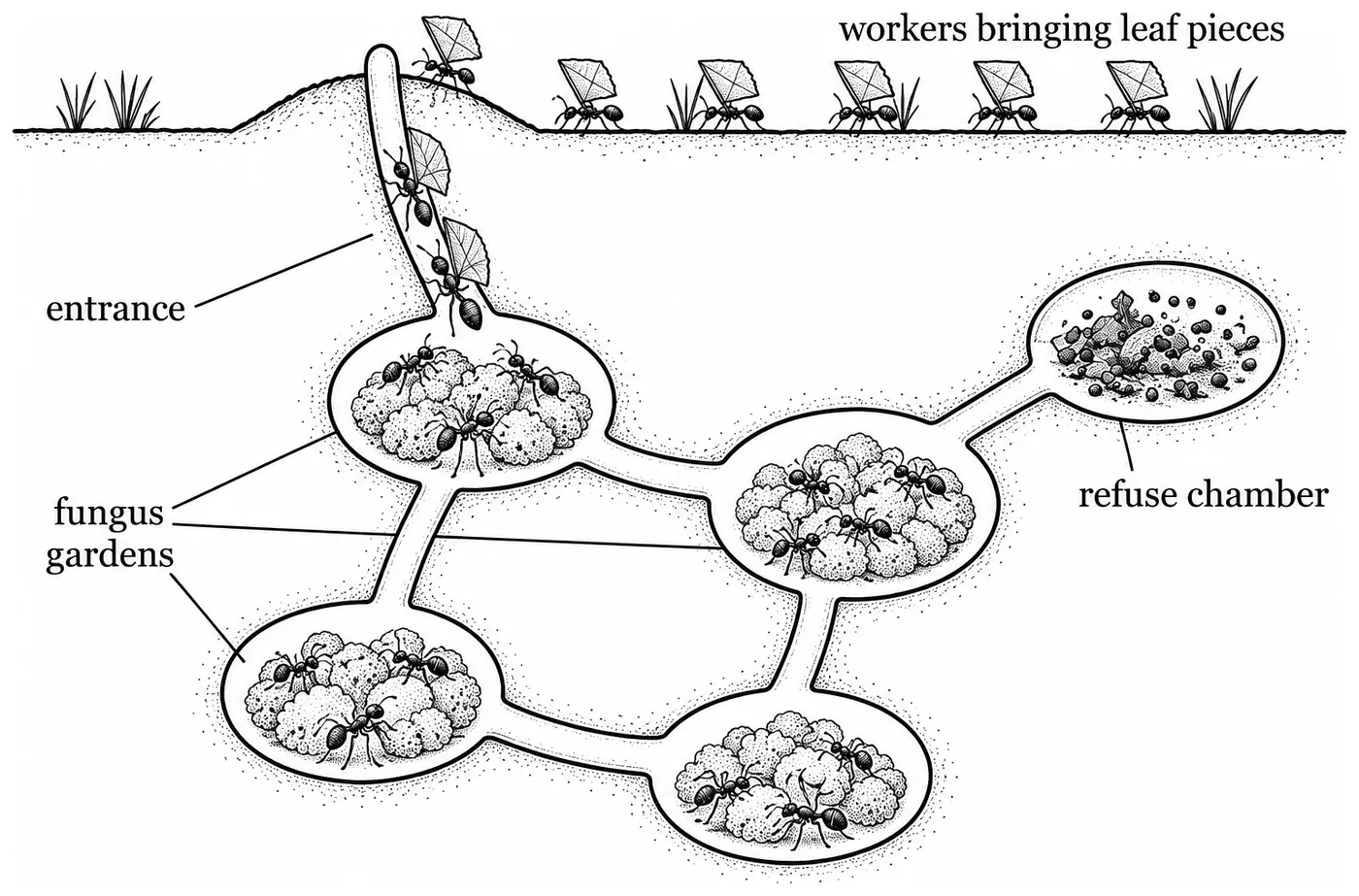
Cross-section of a leafcutter ant nest: a column of workers carrying leaf pieces down an entrance, chambers containing spongy gray fungus gardens tended by small workers, and a separate refuse chamber
A leafcutter nest is a farm. The leaves are compost, the fungus is the crop, and the colony tends it like a field.Illustration from the chapter on E. O. Wilson
Try this

Take two coins. Heads is Y, tails is y. Flip both together; that is one seed. Two tails means a green seed. Do it 40 times and keep a tally. You should get about 10 greens, and the rest yellow. Mendel did the same thing, except his coins were pea plants and he flipped them 8,000 times.

Look around you

Dog breeds show selection at work with a human doing the choosing, which biologists call artificial selection. Every Great Dane and every Chihuahua descends from wolves, shaped by people picking which puppies to keep. Darwin began his book with domestic plants and animals, pigeons above all, for the same reason. If people can do this in thousands of years, nature has had millions of years.

Questions

About Brilliant Biologists

Which biologists are in the book?

Charles Darwin, Gregor Mendel, Jane Goodall, Rachel Carson, Carl Linnaeus, Barbara McClintock, Alexander von Humboldt, Alfred Russel Wallace, Antonie van Leeuwenhoek, E. O. Wilson, Dian Fossey, George Washington Carver, Lynn Margulis, Thomas Hunt Morgan, Wangari Maathai, David Attenborough, Robert Hooke, Mary Anning, James Watson and Francis Crick, and Charles Henry Turner: 21 people in 20 chapters.

Is it about evolution?

Evolution is one thread, through Darwin and Wallace, but the book covers the whole of biology: genetics, microbes, ecology, animal behavior, fossils, cells and DNA.

Do I need to read the other Famous in STEM books first?

No. Brilliant Biologists is Volume 5 of seven, and every volume stands on its own. Each chapter does too, so readers can start with whoever interests them most.

What age is it for?

Readers 13 and up: teens, curious adults and anyone who prefers stories to textbooks. Confident younger readers who love science can read them too: the chapters are short and explain every idea from scratch.

Are the books accurate?

The 2026 editions were rewritten chapter by chapter and fact-checked against published sources. Where an anecdote rests on a single account, the books say so ("the story goes") rather than presenting legend as fact.

More in the series

Six more fields to explore

Start with the field they love.

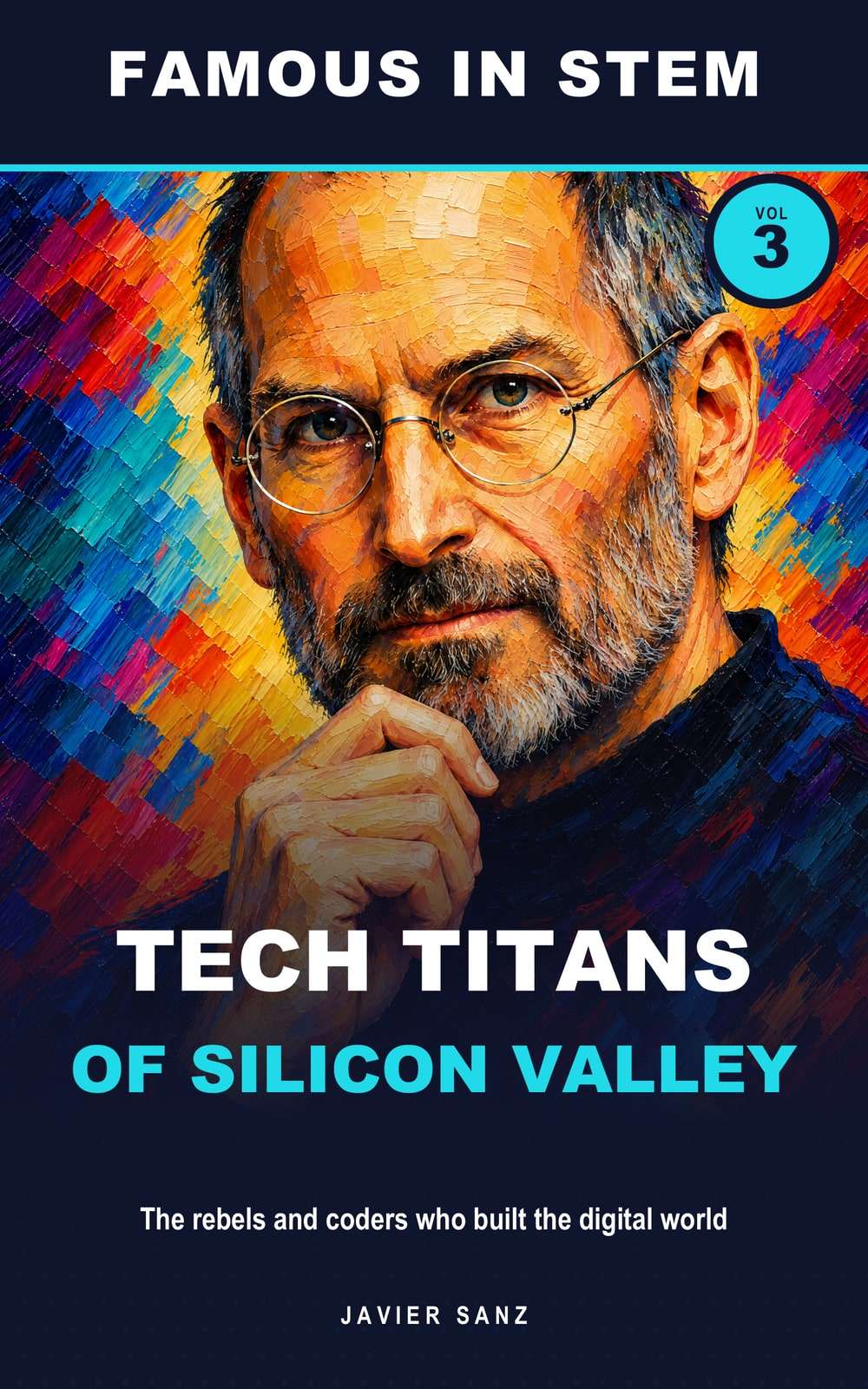
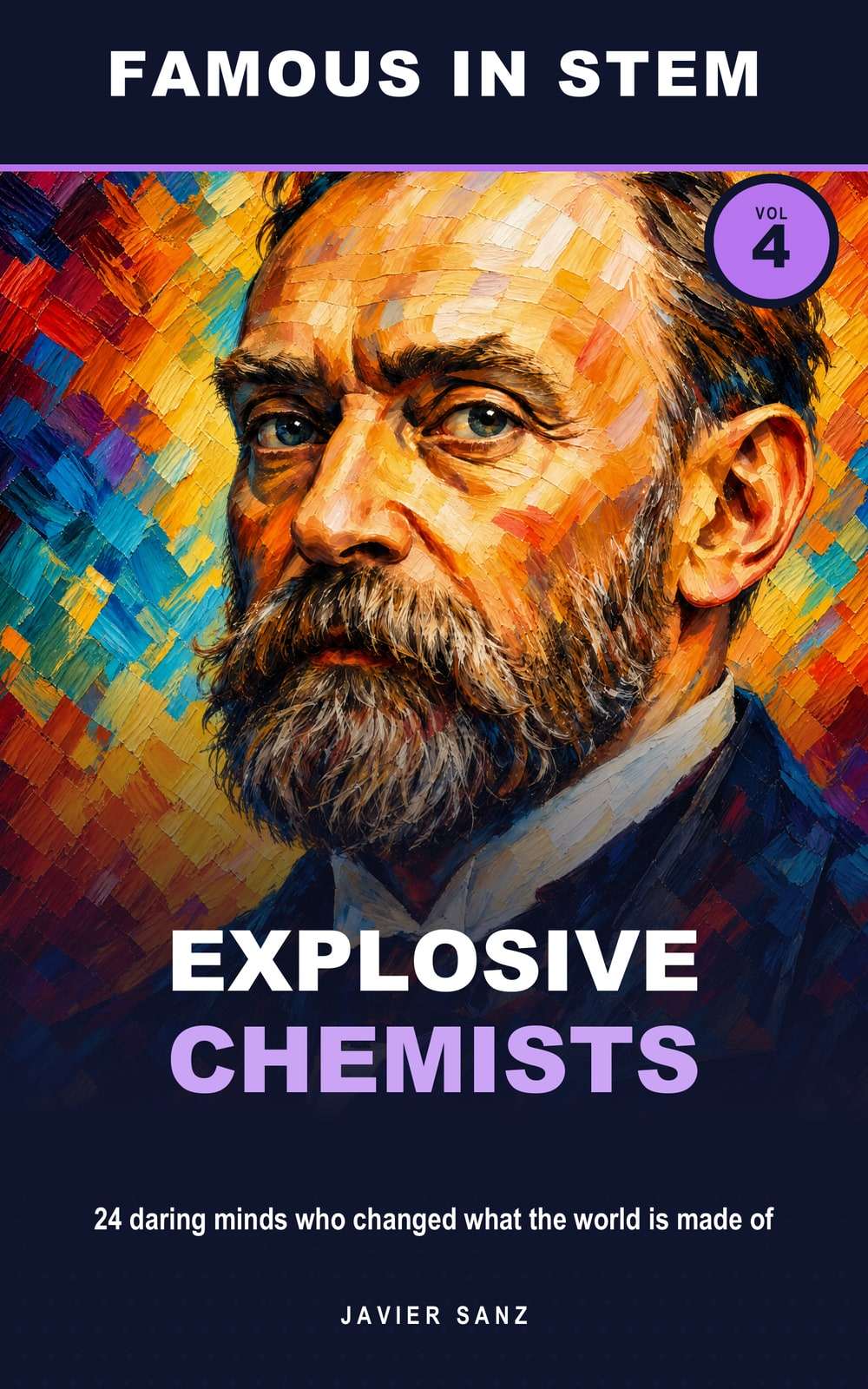
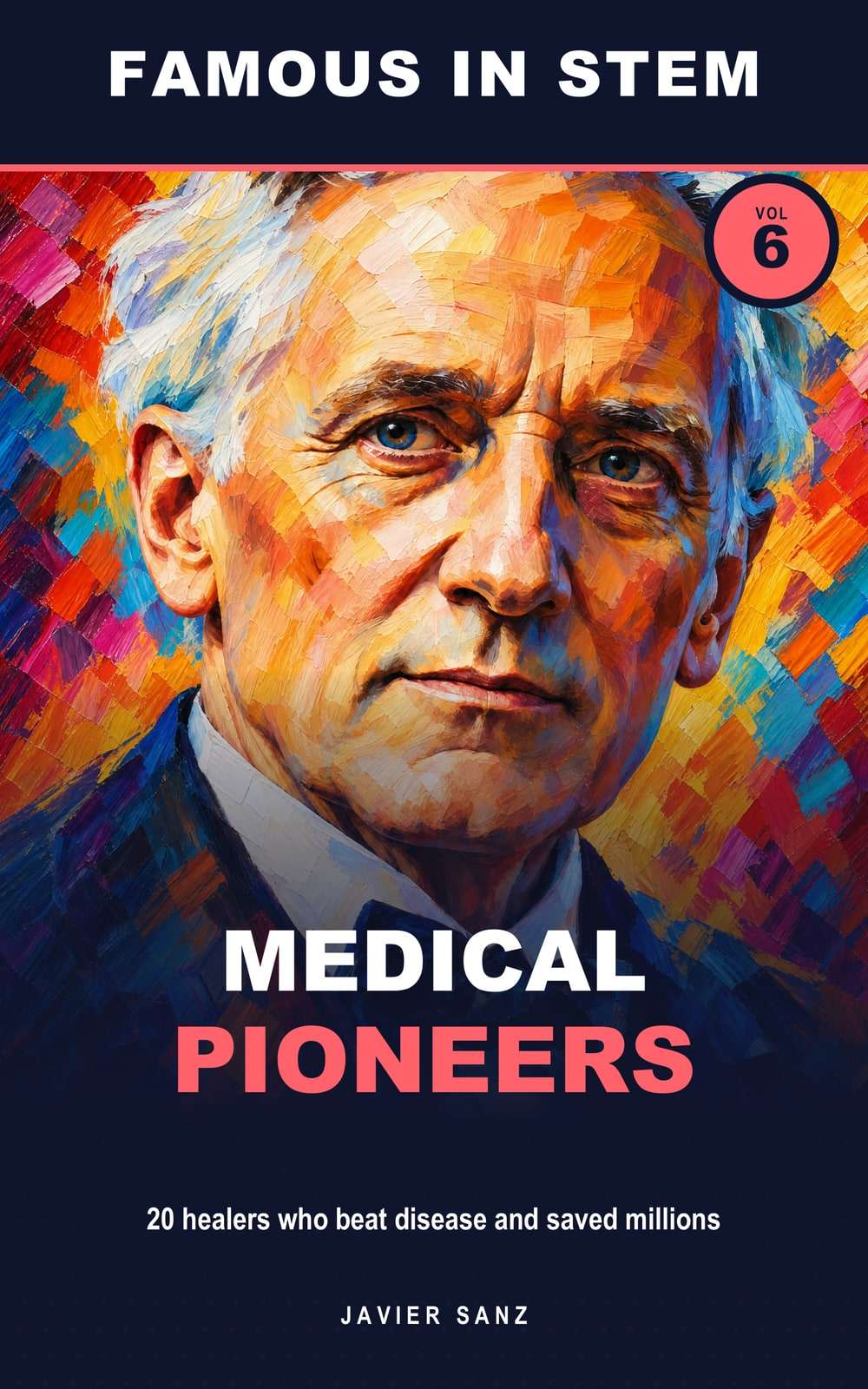
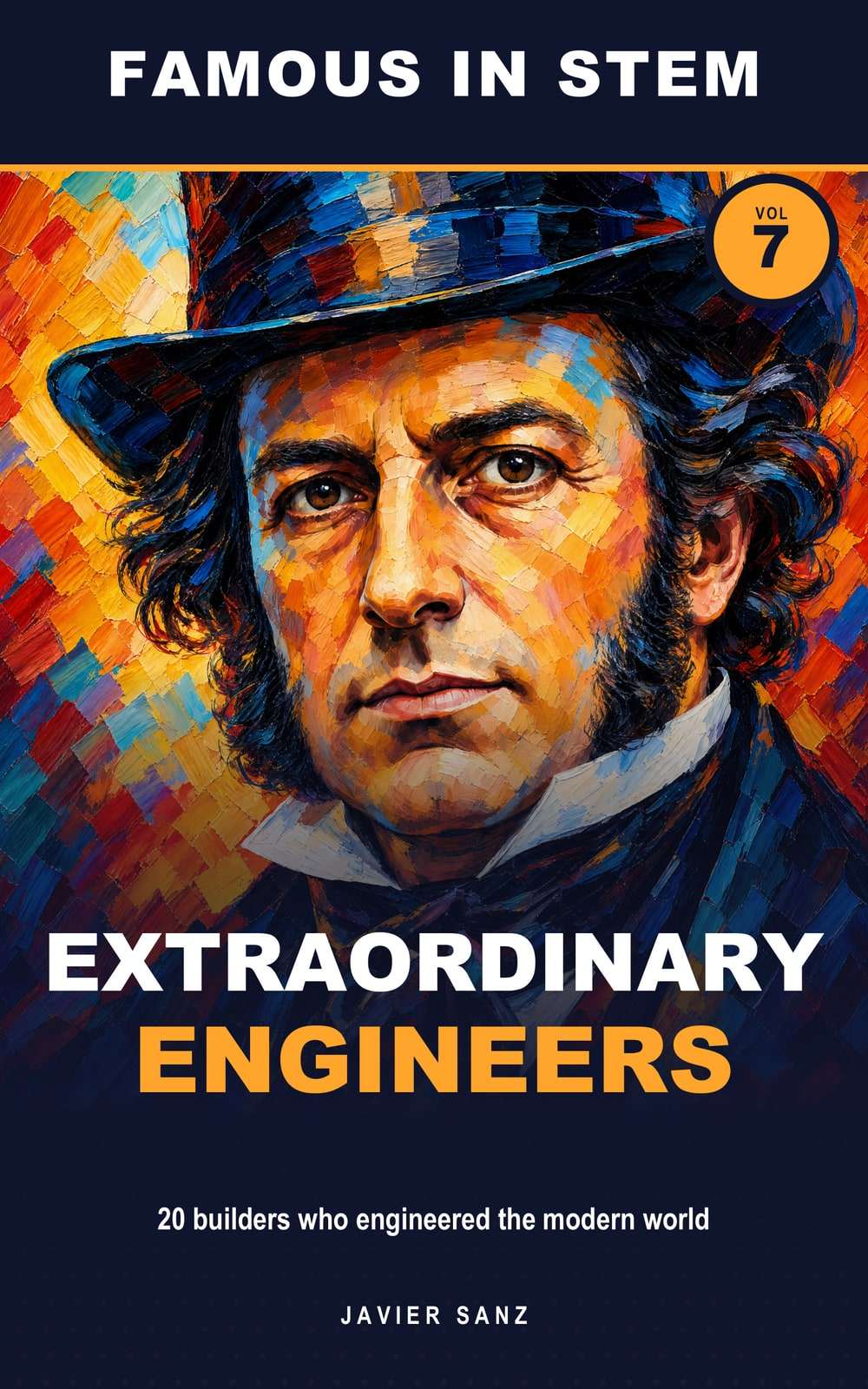
Seven books, one for each corner of STEM. Every volume stands on its own, so there is no wrong place to begin.

Brilliant BiologistsFamous in STEM · Vol. 5
Buy on Amazon