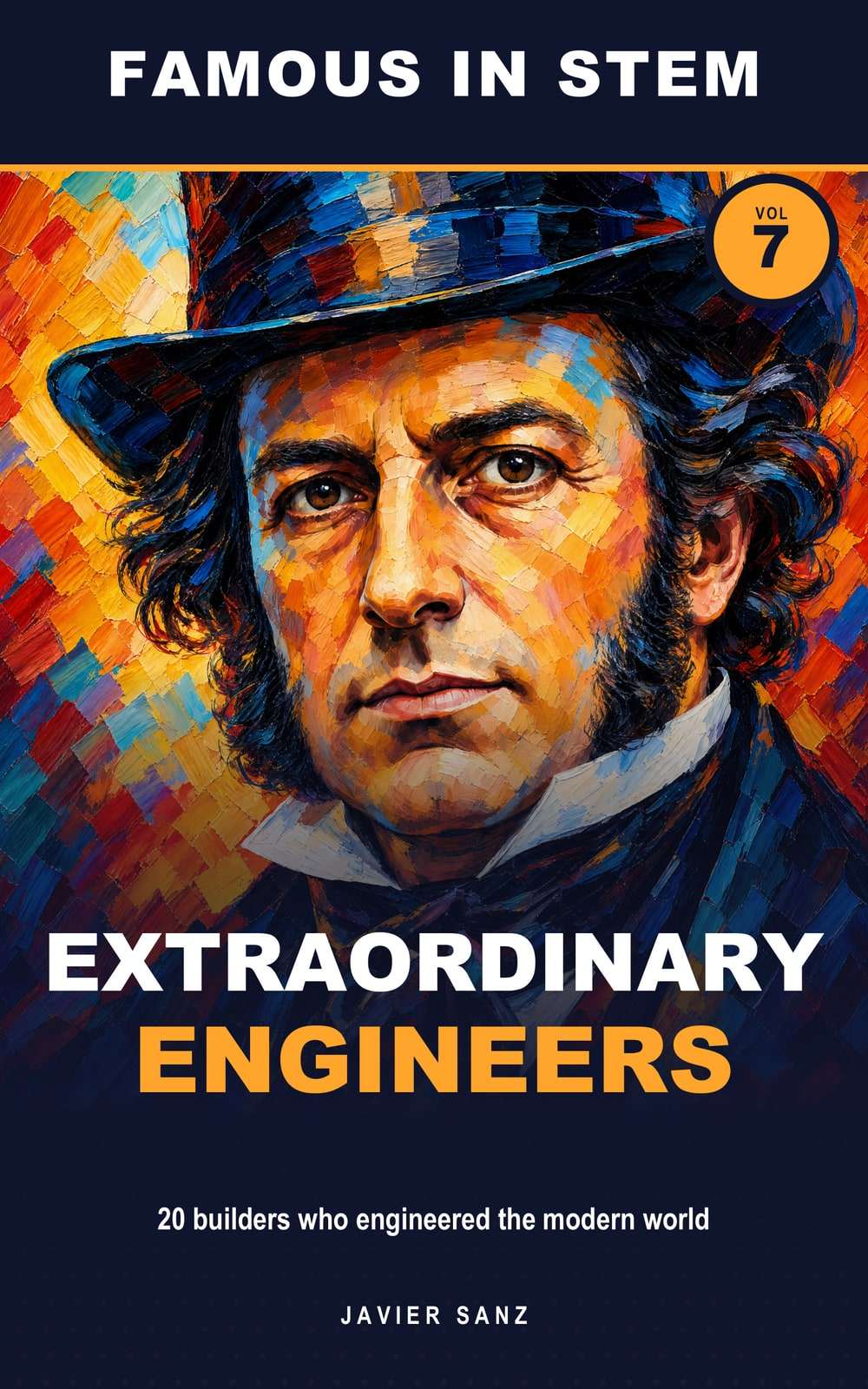
Cover of Famous in STEM, Vol. 7: Extraordinary Engineers by Javier Sanz, showing a painted portrait of Isambard Kingdom Brunel

Famous in STEM · Volume 7

Extraordinary Engineers

20 builders who engineered the modern world

A 21-year-old swept off his feet when the Thames burst into his tunnel. The first person to ride across the Brooklyn Bridge: the woman many people assumed was its real engineer. A rocket designer whose metal ball circled the Earth every 96 minutes. Extraordinary Engineers tells the true stories of 20 builders who engineered the modern world, from James Watt and Gustave Eiffel to Claude Shannon and Fazlur Rahman Khan.

Also see all formats on Amazon, including hardcover where available.

  • 20 chapters
  • Ages 13+
  • Read in any order
  • 2026 edition
  • By Javier Sanz

About this book

Bridges, towers, tunnels, railways, rockets and the bit, told through the builders who engineered the modern world.

Each chapter explains one engineering idea in plain words: why bigger ships are cheaper to run, how a suspension bridge holds up a road, why a tube makes a skyscraper stand, what an orbit really is. Try-this boxes use drink cans, balloons and paper to show the ideas at work.

Engineers are the people who make ideas stand up. A scientist can tell you that a cable is strong in tension and a stone pillar is strong in compression. An engineer has to hang a road across a river with them, and then watch a hundred thousand people walk over it on opening day. If the arithmetic is wrong, everyone knows by lunchtime. I find that thrilling, and I hope by the end of this book you will too.

From “Before you start,” the book’s introduction

Who’s inside

All 20 engineers

Each chapter title and big idea, exactly as they appear in the book.

  1. Isambard Kingdom Brunel

    1806–1859

    The engineer who believed bigger was cheaper

    Big ideaDouble a ship’s size and its cargo grows eight times while its drag grows only about four. Build big.

  2. Gustave Eiffel

    1832–1923

    The man who let the wind draw his tower

    Big ideaShape a tall structure so the wind’s push is met by its own spread, and iron can stand 300 meters high.

  3. James Watt

    1736–1819

    The repairman who noticed where the heat was going

    Big ideaKeep the cylinder hot and cool the steam somewhere else. The engine burns a third to a quarter of the coal.

  4. Fazlur Rahman Khan

    1929–1982

    The engineer who turned skyscrapers into tubes

    Big ideaMake the outside walls do the work. A hollow tube resists wind far better than a frame of columns.

  5. Emily Warren Roebling

    1843–1903

    The woman who carried the Brooklyn Bridge in her head

    Big ideaCables pull, towers push. Give each material the job it is good at and you can hang a road across a river.

  6. Wernher von Braun

    1912–1977

    The rocket builder who worked for two flags

    Big ideaA rocket does not push against the air. It throws hot gas backward, and the gas throws the rocket forward.

  7. George Stephenson

    1781–1848

    The pitman who could not read until he was eighteen

    Big ideaReplace the big boiler flue with twenty-five small tubes and the fire gets about four times as much surface to heat the water.

  8. Lillian Gilbreth

    1878–1972

    The mother of twelve who counted every step

    Big ideaFilm a job, break it into its smallest motions, and throw away the ones that do nothing.

  9. Sergei Korolev

    1907–1966

    The prisoner whose name was a state secret

    Big ideaThrow something fast enough sideways and it falls around the Earth forever. That is an orbit.

  10. John Smeaton

    1724–1792

    The man who built a lighthouse like an oak tree

    Big ideaLock every stone into its neighbors and a tower of blocks becomes one solid thing that the sea cannot pull apart.

  11. Hertha Ayrton

    1854–1923

    The woman who found out why the lights hissed

    Big ideaSmall whirlpools of fluid can build the ripples on a beach, and she hoped well-aimed pulses of air could push lingering poison gas out of a trench or dugout.

  12. Claude Shannon

    1916–2001

    The juggler who measured information

    Big ideaEvery message, picture or song can be counted in yes-or-no answers. One answer is a bit.

  13. Norbert Rillieux

    1806–1894

    The engineer who boiled sugar with used steam

    Big ideaSteam rising off one boiling pan still carries almost all its heat. Catch it and use it to boil the next pan.

  14. Henry Ford

    1863–1947

    The farm boy who made the work come to the worker

    Big ideaKeep the worker still and move the car past him. Twelve and a half hours of assembly became ninety-three minutes.

  15. Marc Isambard Brunel

    1769–1849

    The refugee who, the story goes, learned tunneling from a worm

    Big ideaDig a little, line the hole behind you, push forward. A shipworm does it in wood; a shield does it under a river.

  16. Granville Woods

    1856–1910

    The inventor who talked to a moving train

    Big ideaA changing current in one wire stirs a current in a nearby wire without touching it. That gap can carry a message to a train at full speed.

  17. Ellen Swallow Richards

    1842–1911

    The chemist who mapped a whole state’s dirty water

    Big ideaSalt in a river tells you how far you are from the sea. Too much salt tells you someone’s sewage is in it.

  18. Rudolf Diesel

    1858–1913

    The engine that lights its own fire, and the man who vanished at sea

    Big ideaSqueeze air hard enough and it gets hot enough to set fuel alight by itself. The harder the squeeze, the less fuel is wasted.

  19. Mokshagundam Visvesvaraya

    1861–1962

    The engineer whose birthday is Engineers’ Day

    Big ideaA dam turns four months of monsoon into twelve months of water, and a gate can open itself with no one watching.

  20. Lee de Forest

    1873–1961

    The man who put a gate in a beam of electrons

    Big ideaA tiny voltage on a wire grid can throttle a large flow of electrons. A weak signal becomes a strong one.

Free sample

Read the opening of Isambard Kingdom Brunel’s chapter

The first pages, word for word.

Isambard Kingdom Brunel

The engineer who believed bigger was cheaper

Lived: 1806–1859

Big idea: Double a ship’s size and its cargo grows eight times while its drag grows only about four. Build big.

On January 12, 1828, the Thames broke into the tunnel being dug beneath it. The resident engineer, a twenty-one-year-old named Isambard Kingdom Brunel, was swept off his feet by an immense wave of water. Six workers drowned. Brunel was carried up a shaft by the flood and pulled out alive, badly hurt. He was sent away to recover, first to the seaside at Brighton and then to Clifton, near Bristol.

In 1829, Bristol announced a competition for a bridge across the Avon Gorge, a chasm with a river seventy-five meters below. Brunel entered. His design was chosen in 1831. It was the beginning of a career in which almost nothing he built was ordinary, and almost everything was larger than anyone had tried before.

The father’s son

Brunel’s father, Marc, was a French engineer who had fled the Revolution and settled in England. He gave the boy his own middle name, Isambard, to go with his mother’s family name, Kingdom, taught him drawing and geometry at home, and sent him to school in France. There Isambard studied under Breguet, one of the most famous clockmakers in Paris, learning how precise a machine could be. Then he came home to work for his father in the mud under the Thames.

The tunnel was Marc’s great project, but it taught the son something that stayed with him. Water, rock and money all have to be managed at once. When the tunnel flooded, the company ran out of cash and the works stopped for about seven years. Brunel never forgot that an engineer who ignores the budget soon has no project at all.

The chapter goes on. So do 19 more.
From the book

See it, try it, think about it

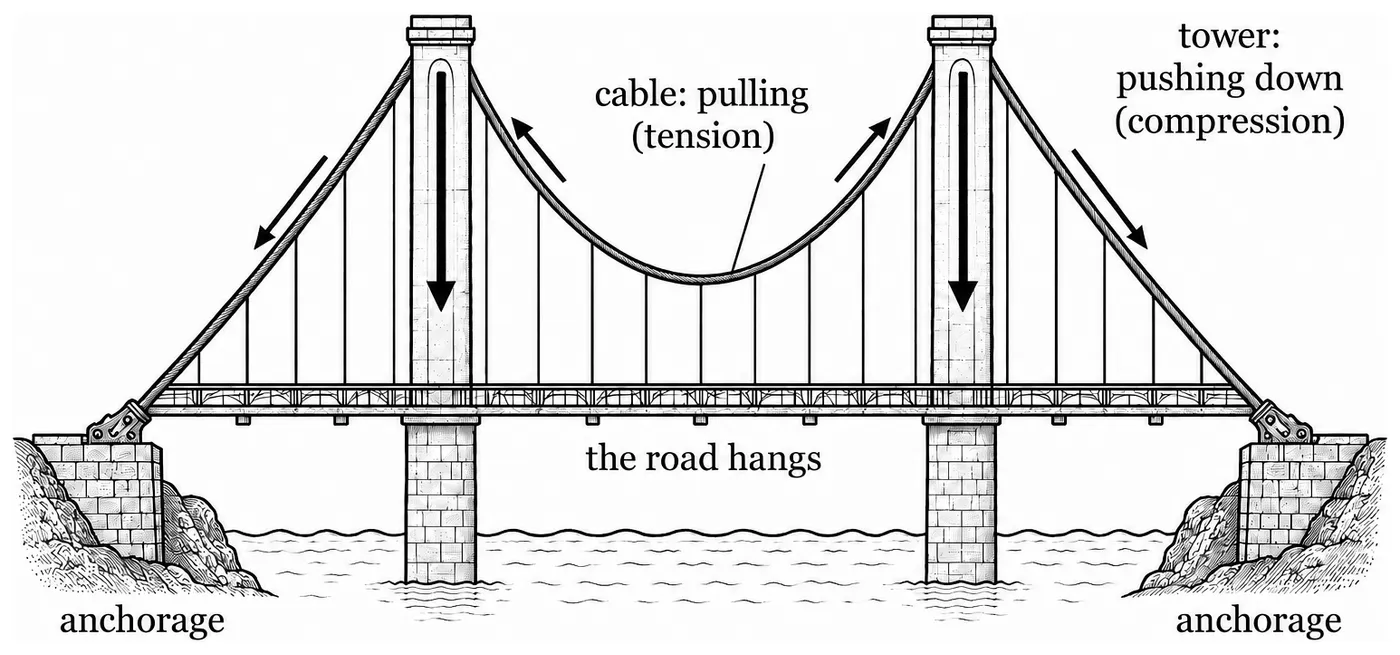
Side view of a suspension bridge with arrows: cables in tension (pulling), towers in compression (pushing down), vertical hangers holding the deck, anchorages at each end
The cables pull, the towers push, and the road simply hangs.Illustration from the chapter on Emily Warren Roebling
Try this

Hold an empty drink can by its ends and try to bend it. Now ask an adult to cut a strip of the same aluminum from another can (the cut edges are sharp, so wear gloves), hold it flat and bend it. Same metal, same thickness. The can resists because its metal is far from the center line of the bend. Many of Khan’s tallest buildings are that can, standing on end.

Try this

Blow up a balloon and let it go. The air rushes out the back and the balloon shoots forward, in a vacuum or not. Now sit on a skateboard on a smooth, flat floor and throw a heavy bag of books away from you. You roll the other way. You have just built a rocket, with the bag as exhaust.

Questions

About Extraordinary Engineers

Which engineers are in the book?

Isambard Kingdom Brunel, Gustave Eiffel, James Watt, Fazlur Rahman Khan, Emily Warren Roebling, Wernher von Braun, George Stephenson, Lillian Gilbreth, Sergei Korolev, John Smeaton, Hertha Ayrton, Claude Shannon, Norbert Rillieux, Henry Ford, Marc Isambard Brunel, Granville Woods, Ellen Swallow Richards, Rudolf Diesel, Mokshagundam Visvesvaraya and Lee de Forest: 20 in all.

Is it only about bridges and buildings?

No. Alongside towers, bridges, tunnels and railways, the book covers steam and diesel engines, rockets and orbits, radio, the assembly line, clean water and the bit, the unit of information.

Do I need to read the other Famous in STEM books first?

No. Extraordinary Engineers is Volume 7 of seven, and every volume stands on its own. Each chapter does too, so readers can start with whoever interests them most.

What age is it for?

Readers 13 and up: teens, curious adults and anyone who prefers stories to textbooks. Confident younger readers who love science can read them too: the chapters are short and explain every idea from scratch.

Are the books accurate?

The 2026 editions were rewritten chapter by chapter and fact-checked against published sources. Where an anecdote rests on a single account, the books say so ("the story goes") rather than presenting legend as fact.

More in the series

Six more fields to explore

Start with the field they love.

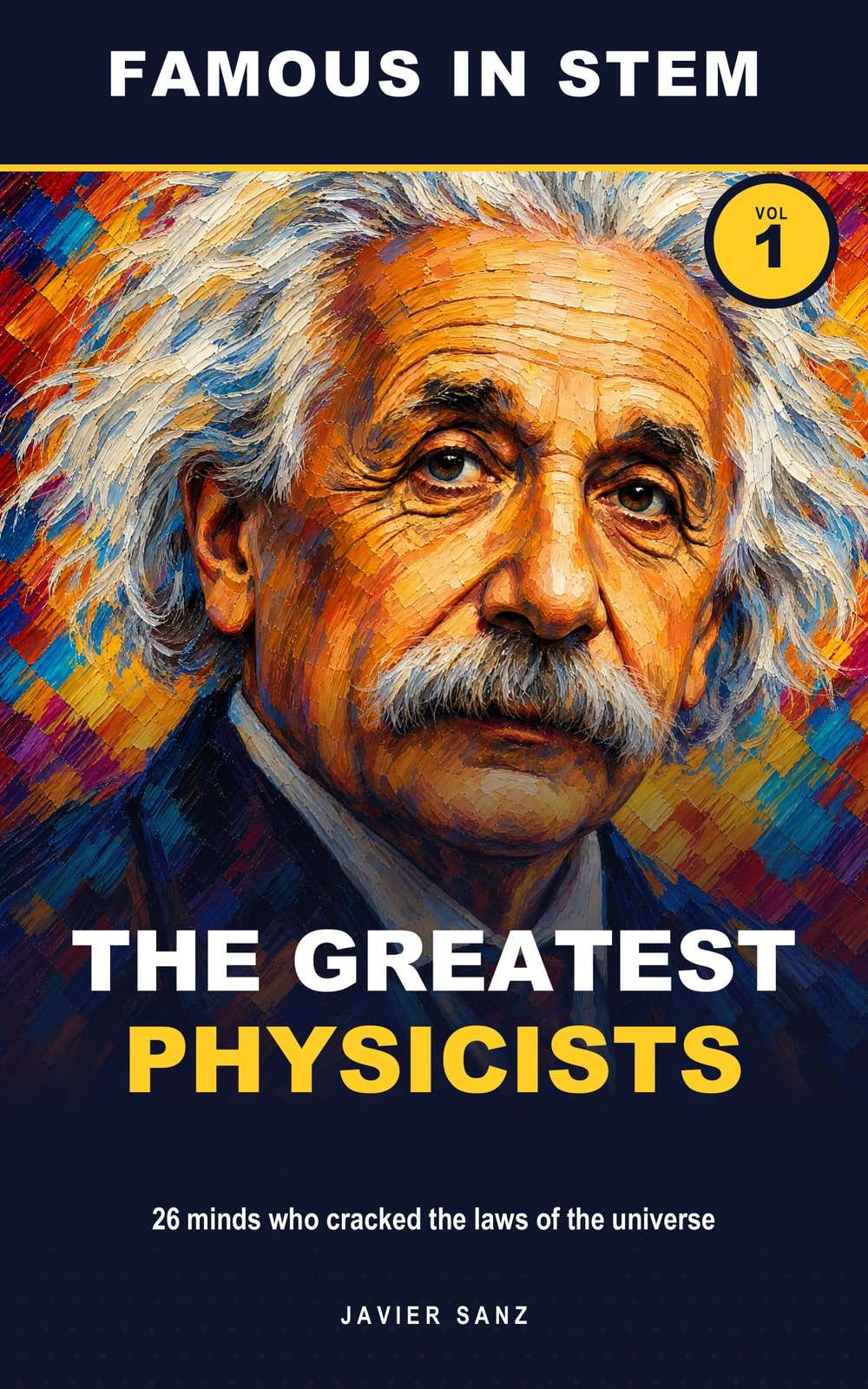
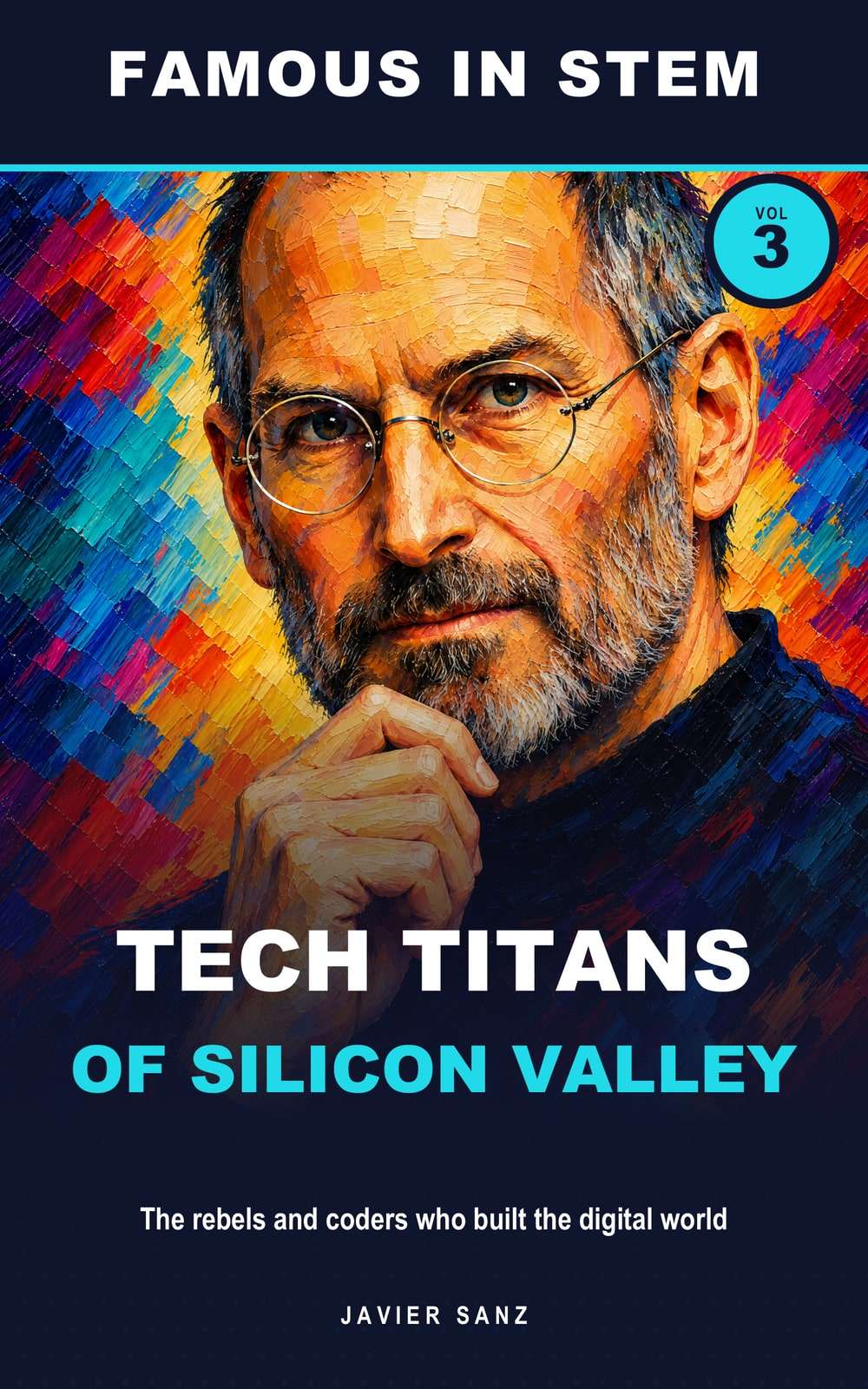
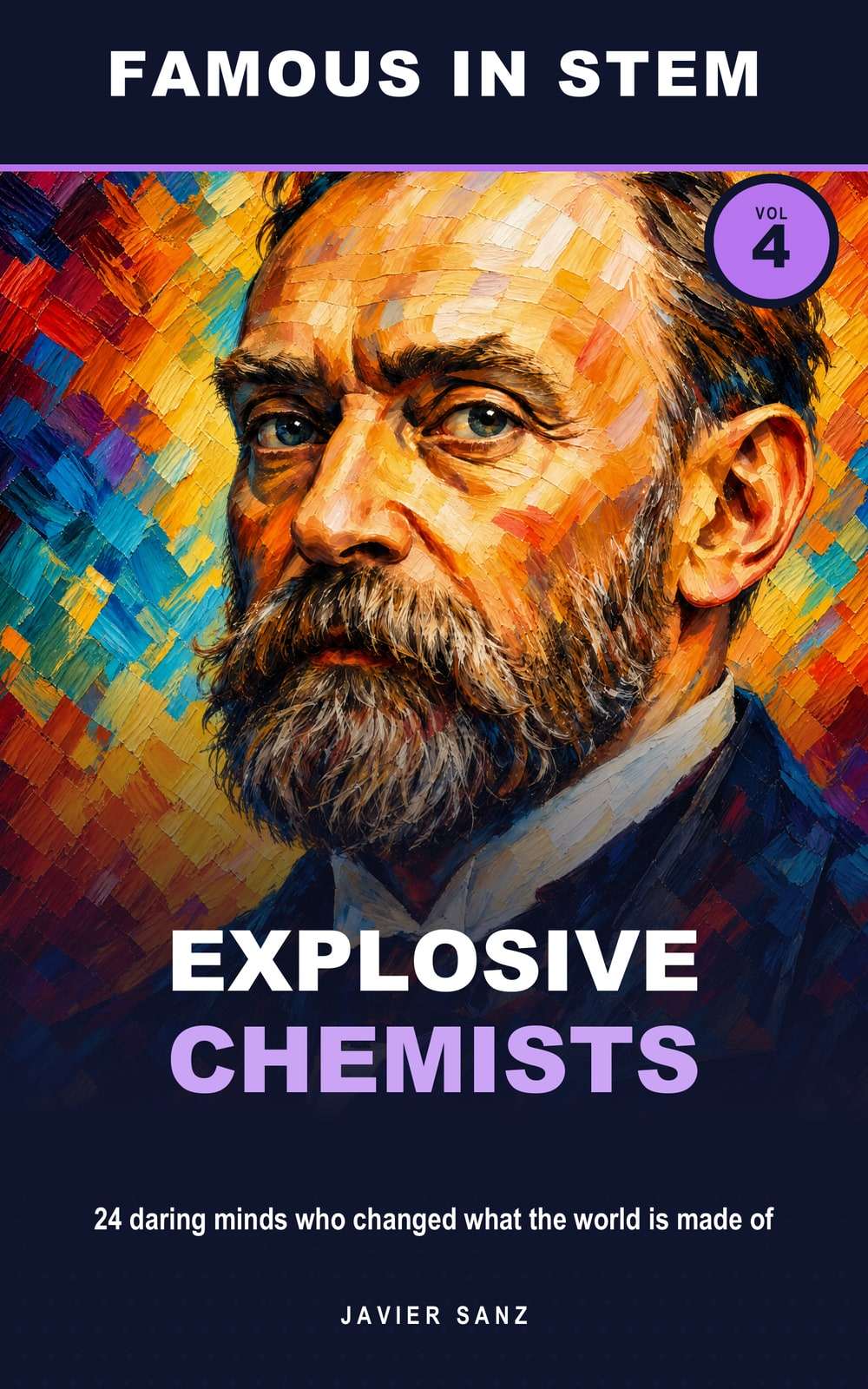
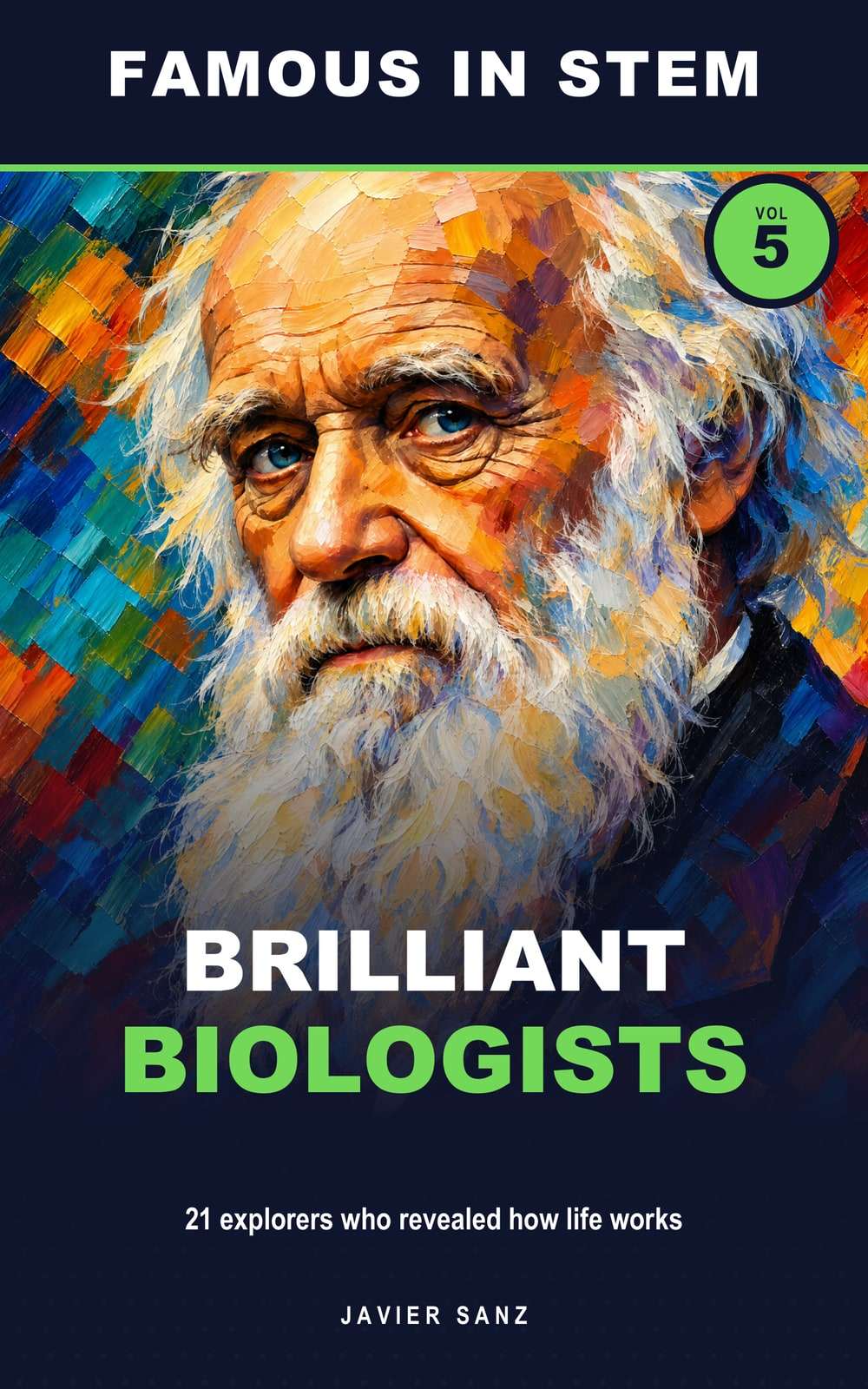
Seven books, one for each corner of STEM. Every volume stands on its own, so there is no wrong place to begin.

Extraordinary EngineersFamous in STEM · Vol. 7
Buy on Amazon