 Famous in STEM
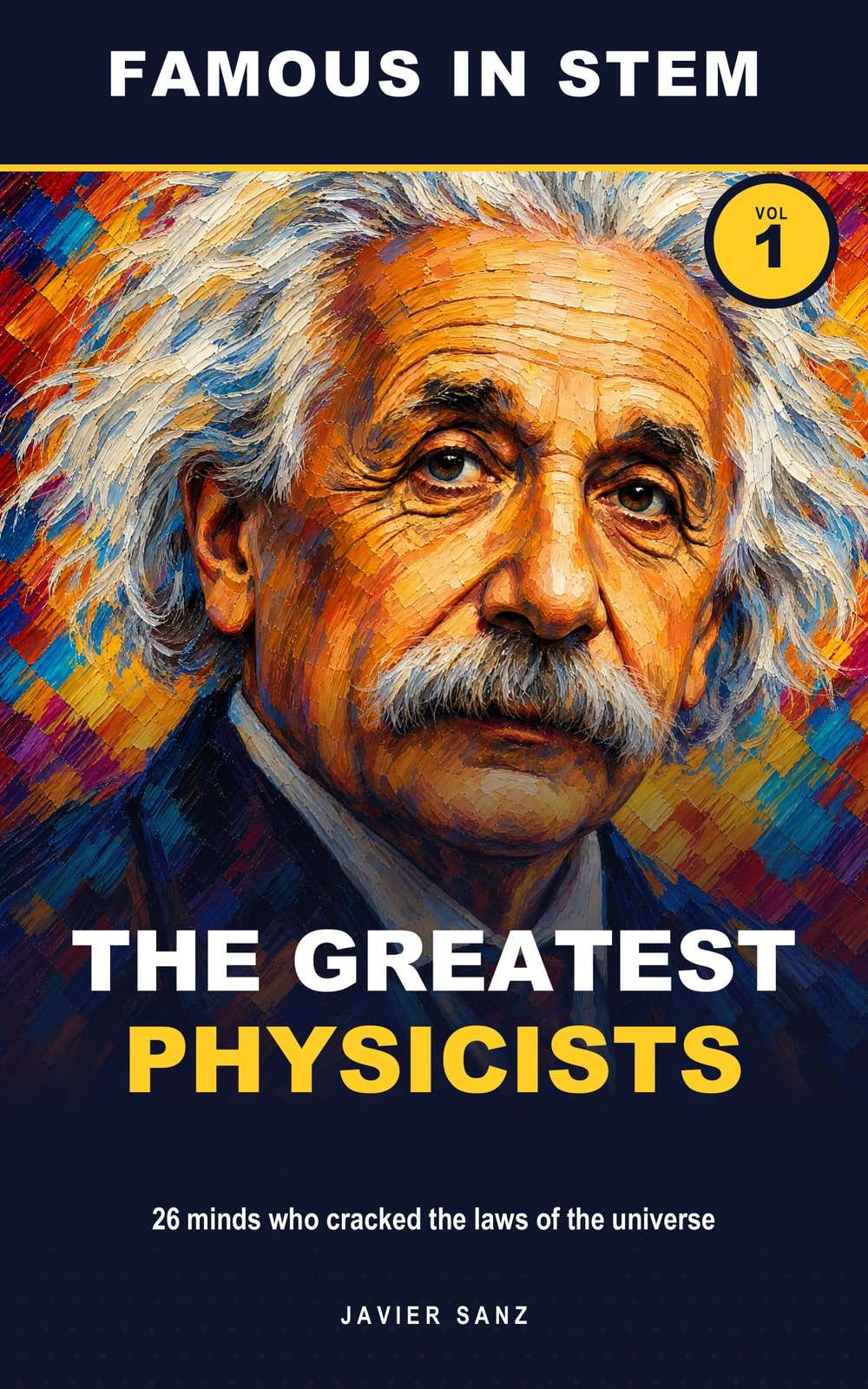
Vol. 1 · Physics
The Greatest Physicists
26 minds who cracked the laws of the universe
With Isaac Newton, Nikola Tesla, Marie Curie and 23 more
7 books · True stories · Ages 13+
158 short, true stories of the physicists, mathematicians, coders, chemists, biologists, doctors and engineers who changed the world. Each one opens like a novel and explains the science in plain words.
The series
Every volume stands on its own: 20 to 27 people, one field, one short chapter each. Start anywhere.
Vol. 1 · Physics
26 minds who cracked the laws of the universe
With Isaac Newton, Nikola Tesla, Marie Curie and 23 more
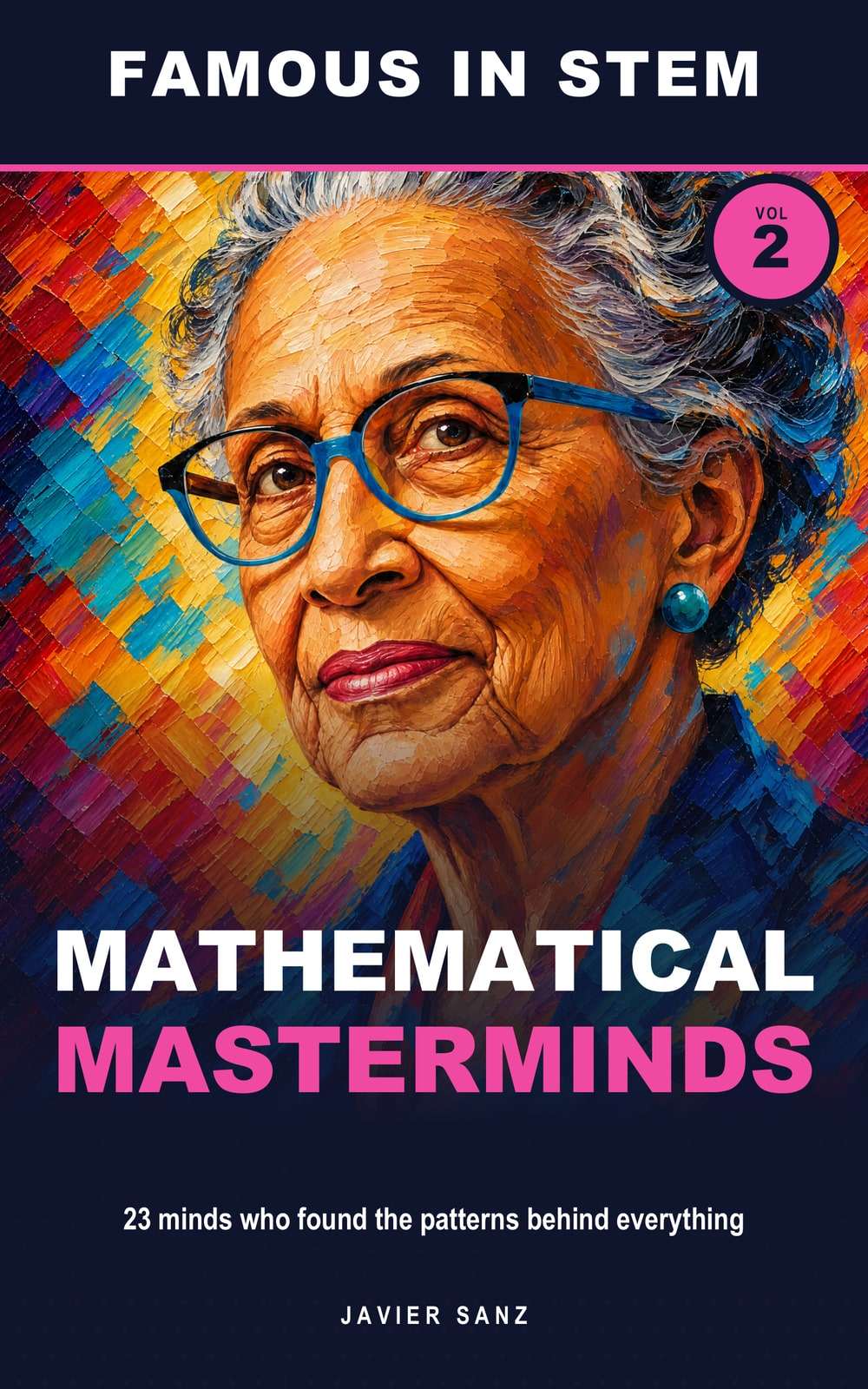
Vol. 2 · Mathematics
23 minds who found the patterns behind everything
With Carl Friedrich Gauss, Blaise Pascal, Alan Turing and 20 more
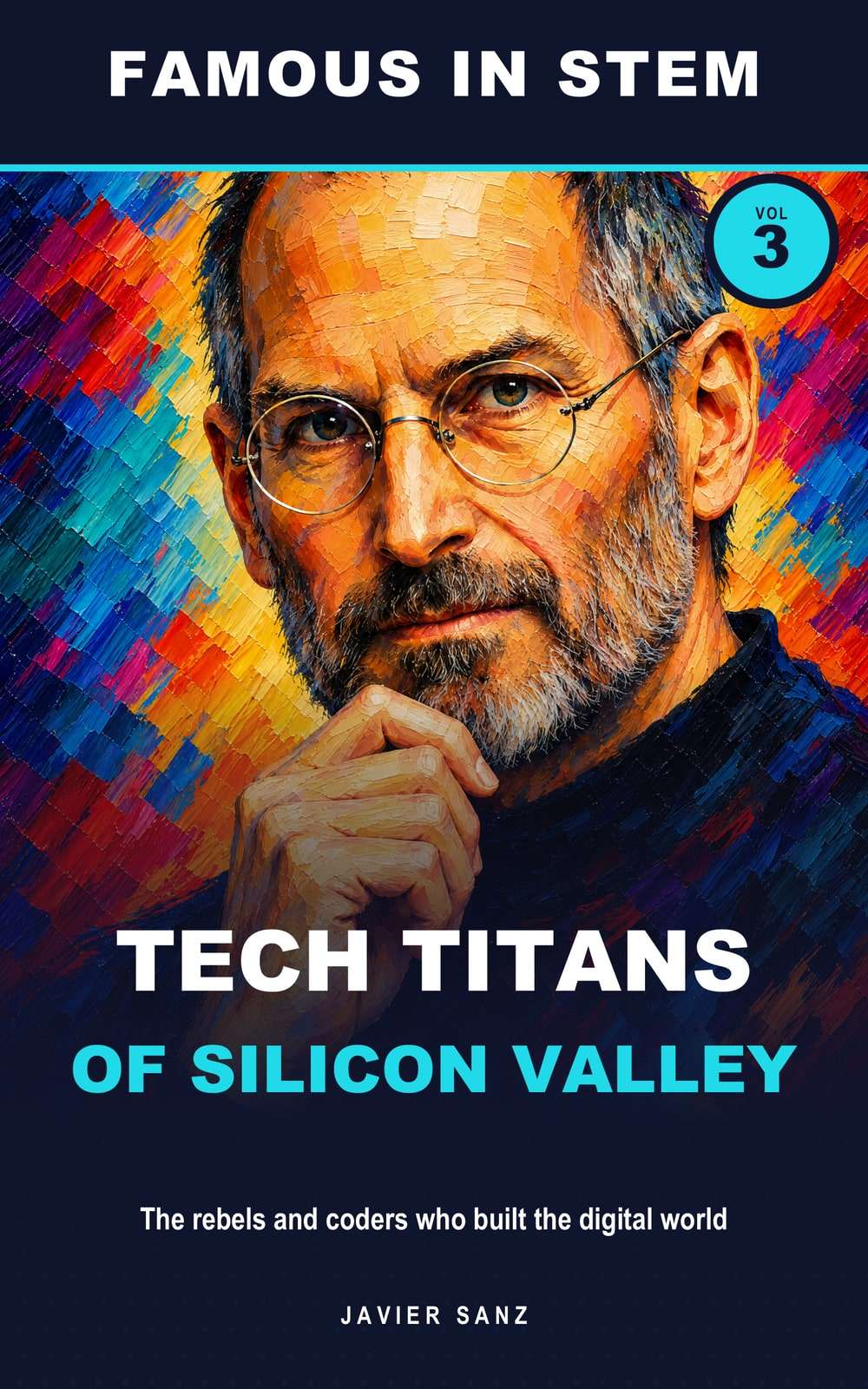
Vol. 3 · Computing and technology
The rebels and coders who built the digital world
With Steve Jobs, Bill Gates, Steve Wozniak and 24 more
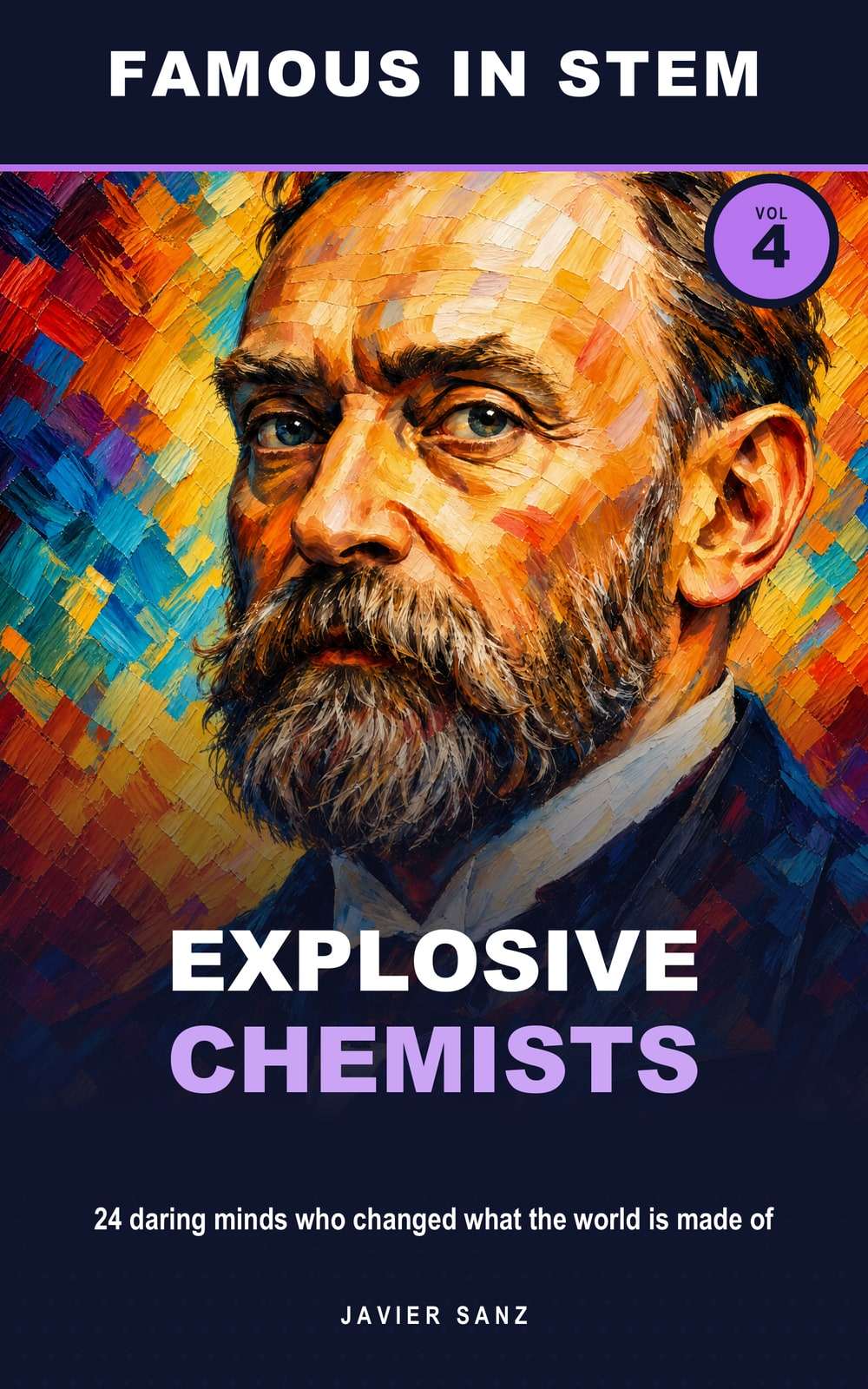
Vol. 4 · Chemistry
24 daring minds who changed what the world is made of
With Alfred Nobel, Antoine Lavoisier, Dmitri Mendeleev and 21 more
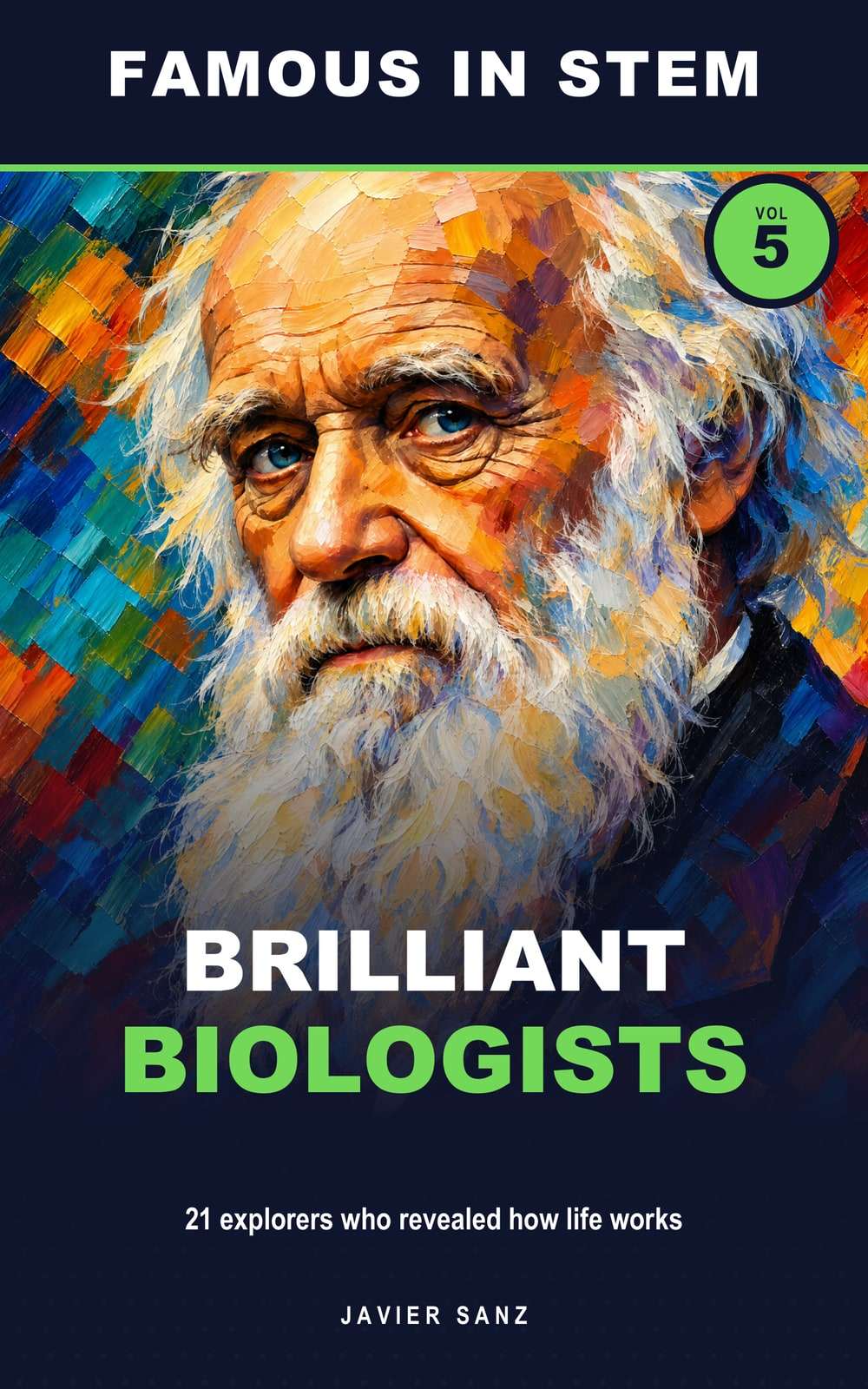
Vol. 5 · Biology
21 explorers who revealed how life works
With Charles Darwin, Gregor Mendel, Jane Goodall and 18 more
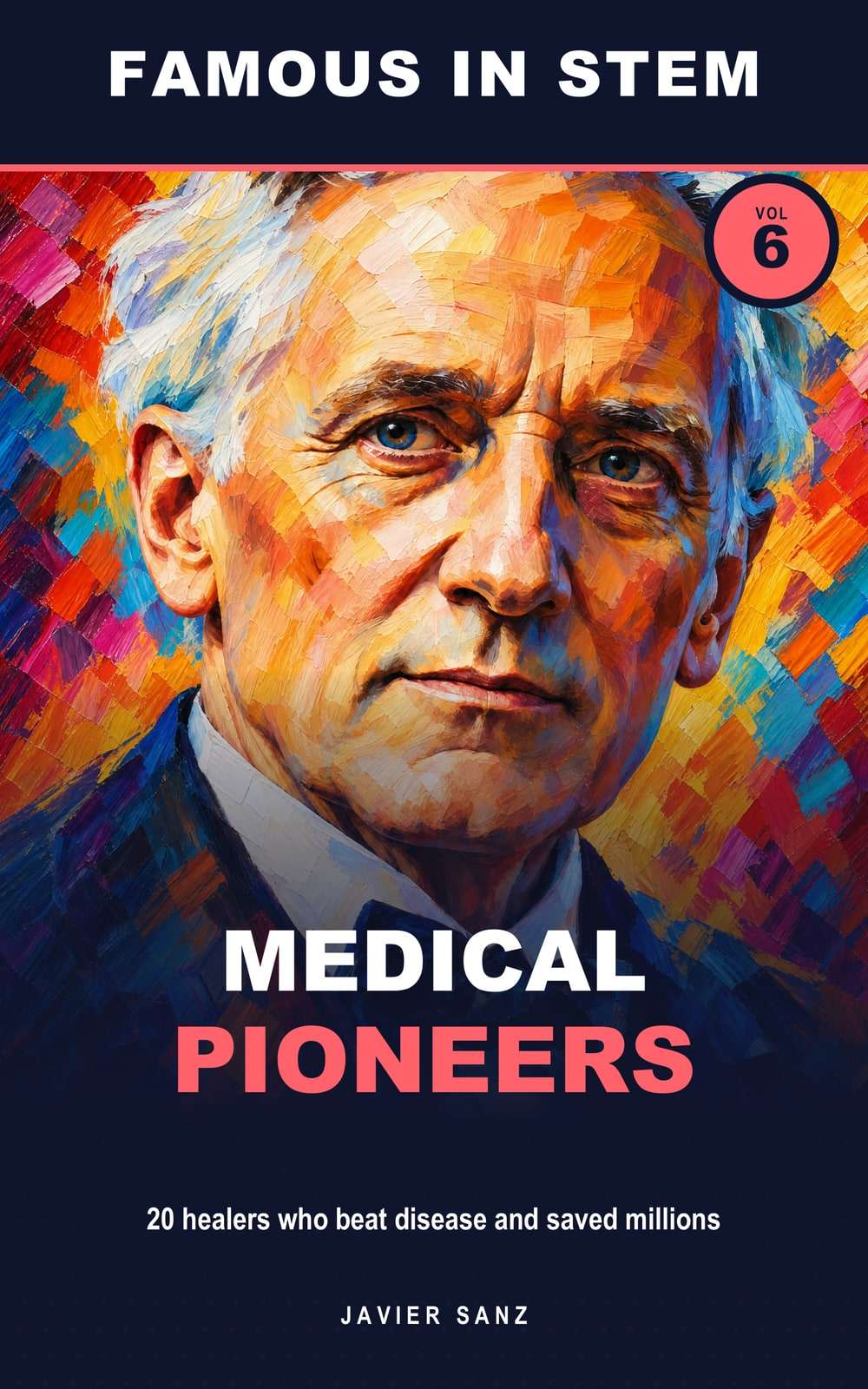
Vol. 6 · Medicine
20 healers who beat disease and saved millions
With Alexander Fleming, Edward Jenner, Florence Nightingale and 17 more
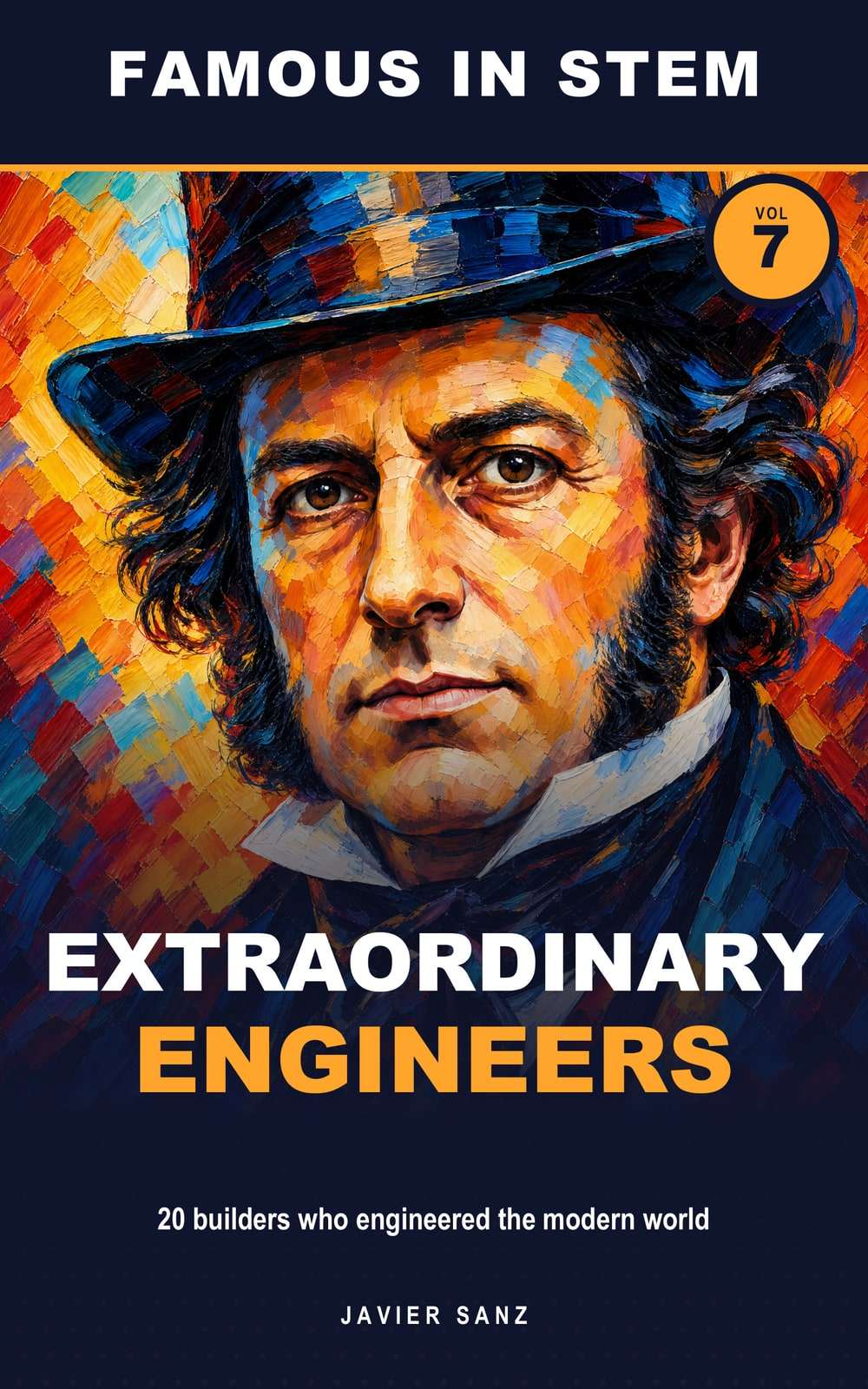
Vol. 7 · Engineering
20 builders who engineered the modern world
With Isambard Kingdom Brunel, Gustave Eiffel, James Watt and 17 more
The complete series
161 people, 158 chapters, from physics to engineering. A shelf that covers all of STEM.
First lines
Chapters start in the middle of a real moment, then tells you who was there and why it mattered. These are real first lines from the books.
In 1963 a twenty-one-year-old graduate student at Cambridge was told he had perhaps two years to live.
In February 1962, John Glenn was about to become the first American to orbit the Earth.
On September 9, 1947, a computer at Harvard University stopped working.
On June 12, 1951, someone threw a stick of dynamite at a house in Oak Park, Illinois.
One morning in late 1960, on a steep hillside above Lake Tanganyika, a young woman crouched in the grass and watched a chimpanzee she had named David Greybeard.
In September 1928, by the usual telling, a Scottish bacteriologist came back from his summer vacation to a cluttered laboratory at St. Mary’s Hospital in London.
In May 1883, shortly before the president of the United States came to open it, a carriage rolled onto the new bridge across the East River.
Inside a chapter
Every chapter follows the same simple shape, so readers always know where they are.
She boiled down tons of rock to find a glow
Lived: 1867–1934
Big idea: Some atoms fall apart on their own and give off energy. She named it radioactivity and found two elements that do it.
The shed had a leaking glass roof, a tarred floor and no way to clear the poisonous fumes, so the smokiest work had to be done outside in the yard. Through 1898 and the years after, a woman stood over a boiling mass of rock, stirring it with an iron rod nearly as big as herself. Some days she stirred for hours without a break. At night she and her husband would walk back to the shed and stand in the dark, looking at the bottles and tubes on the tables. They glowed, faint as fairy lights, all by themselves.
From Vol. 1, The Greatest Physicists
Read more of this chapterHands on
Most chapters include a small experiment, something to look for on the way to school, or a question to argue about at dinner. Three examples, word for word from the books:
Hold a strip of paper by one end just below your bottom lip, so that it droops. Blow hard across the top of it. The strip rises toward the horizontal. You have made a wing out of paper. The air bends to follow the curve of the paper, and air flowing around a bend presses less on the inside of it, so the still air below pushes the strip up.
Red cabbage does the same trick in your kitchen. Chop a few leaves, soak them in hot water for ten minutes and pour the purple liquid into three glasses. Add lemon juice to one and it turns pink; add a spoon of baking soda to another and it turns blue or blue-green. The third is your control. You have made an indicator, and it works for the same reason as Baeyer’s.
Gauss’s pairing trick works for any run of numbers. Add 1 to 20: pair 1 with 20, 2 with 19 and so on. Ten pairs of 21 make 210. Now do 1 to 1,000. Five hundred pairs of 1,001 make 500,500, and the answer takes longer to say than to find.
Which book first?
Pick an interest and we’ll point you to the right volume.
Volume 1
26 minds who cracked the laws of the universe
Gravity, electricity, radioactivity, relativity and black holes, told through the people who figured them out.
Volume 2
23 minds who found the patterns behind everything
Code-breaking, infinity, prime numbers and flight paths to orbit, told through the people who found the patterns.
Volume 3
The rebels and coders who built the digital world
The chip, the internet, the web and the companies built on them, told through the rebels and coders who made them.
Volume 4
24 daring minds who changed what the world is made of
Dynamite, the periodic table, DNA, plastics and Kevlar, told through the chemists who made them.
Volume 5
21 explorers who revealed how life works
Evolution, genes, chimpanzees, ants and the double helix, told through the explorers who revealed how life works.
Volume 6
20 healers who beat disease and saved millions
Vaccines, antibiotics, hand-washing, blood banks and heart surgery, told through the healers who fought for them.
Volume 7
20 builders who engineered the modern world
Bridges, towers, tunnels, railways, rockets and the bit, told through the builders who engineered the modern world.
Who it’s for
Short chapters, real drama and ideas explained without jargon. Good for readers 13 and up who like to know how things work, and for younger readers who already do.
A thoughtful gift that matches a real interest, from coding to medicine. Choose by field with the gift guide, or give the whole set.
One person per chapter, with dates, a big idea and an activity: a ready start for biography projects and science discussions. See ideas for class.
Who’s inside
Every name below is a chapter. Tap one to see their big idea and which book they’re in.
Questions
A series of seven nonfiction books by Javier Sanz. Each book tells the true stories of 20 to 27 people from one field (physics, mathematics, computing, chemistry, biology, medicine or engineering) in short chapters that explain the science in plain language. 158 chapters and 161 people in all.
Readers 13 and up: teens, curious adults and anyone who prefers stories to textbooks. Confident younger readers who love science can read them too: the chapters are short and explain every idea from scratch.
No. Every volume stands on its own, and so does every chapter. Start with the field your reader loves most.
A short biography of one person (a few chapters cover two people who worked together), opening with a true scene from their life. Each starts with a fact box (born, died and the big idea in one or two sentences), explains one real piece of science, and most include a "Try this", "Look around you" or "Think about it" box. Many chapters have an illustration of the science.
The 2026 editions were rewritten chapter by chapter and fact-checked against published sources. Where an anecdote rests on a single account, the books say so ("the story goes") rather than presenting legend as fact.
Yes. Each chapter gives a student a person, dates, the key idea and a story to build on, in a few pages, which makes the series a good starting point for choosing a scientist and planning a report.
On Amazon, in paperback and Kindle editions (hardcover editions are listed on Amazon where available). Each book page on this site links straight to its Amazon listing.
Seven books, one for each corner of STEM. Every volume stands on its own, so there is no wrong place to begin.