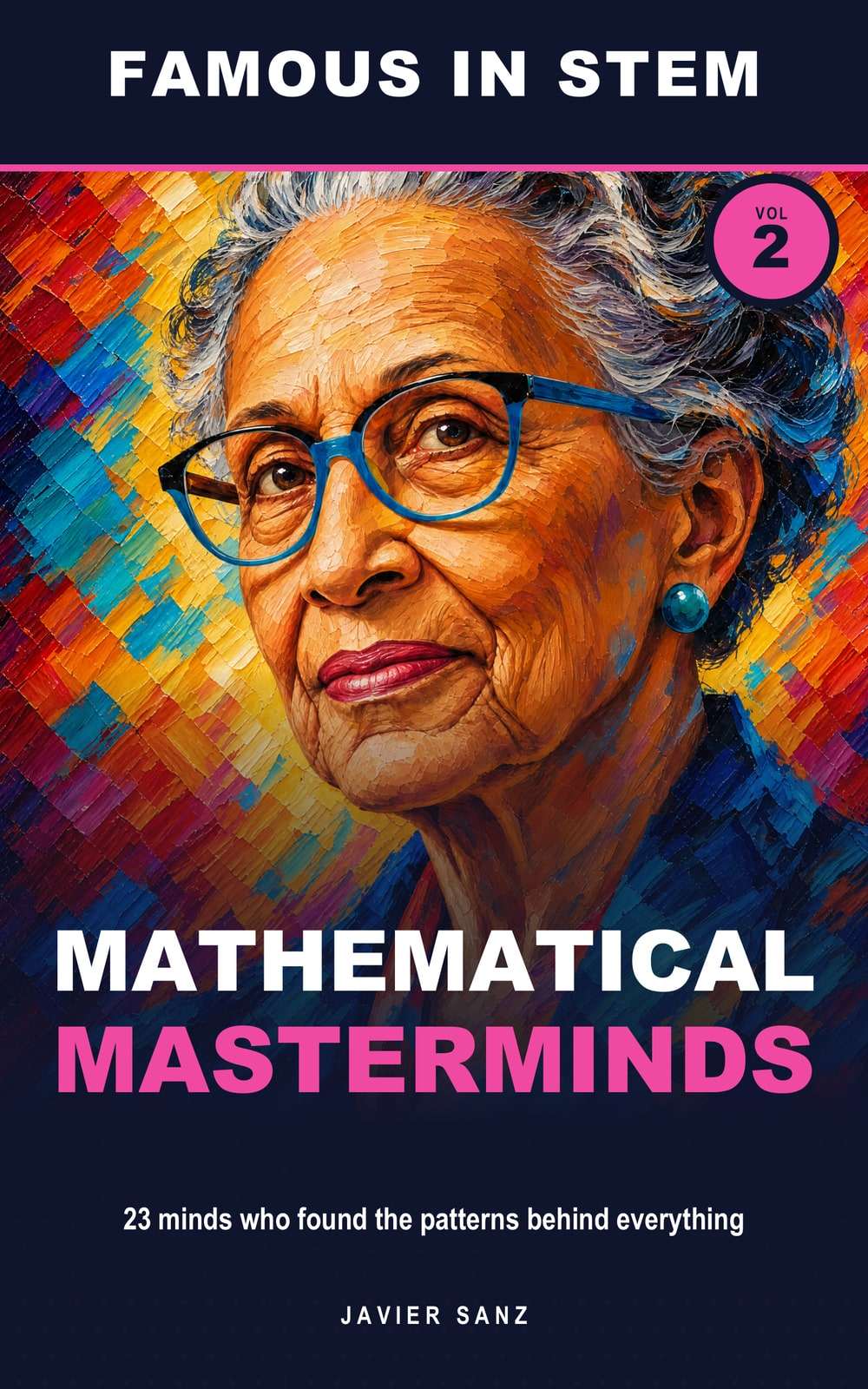
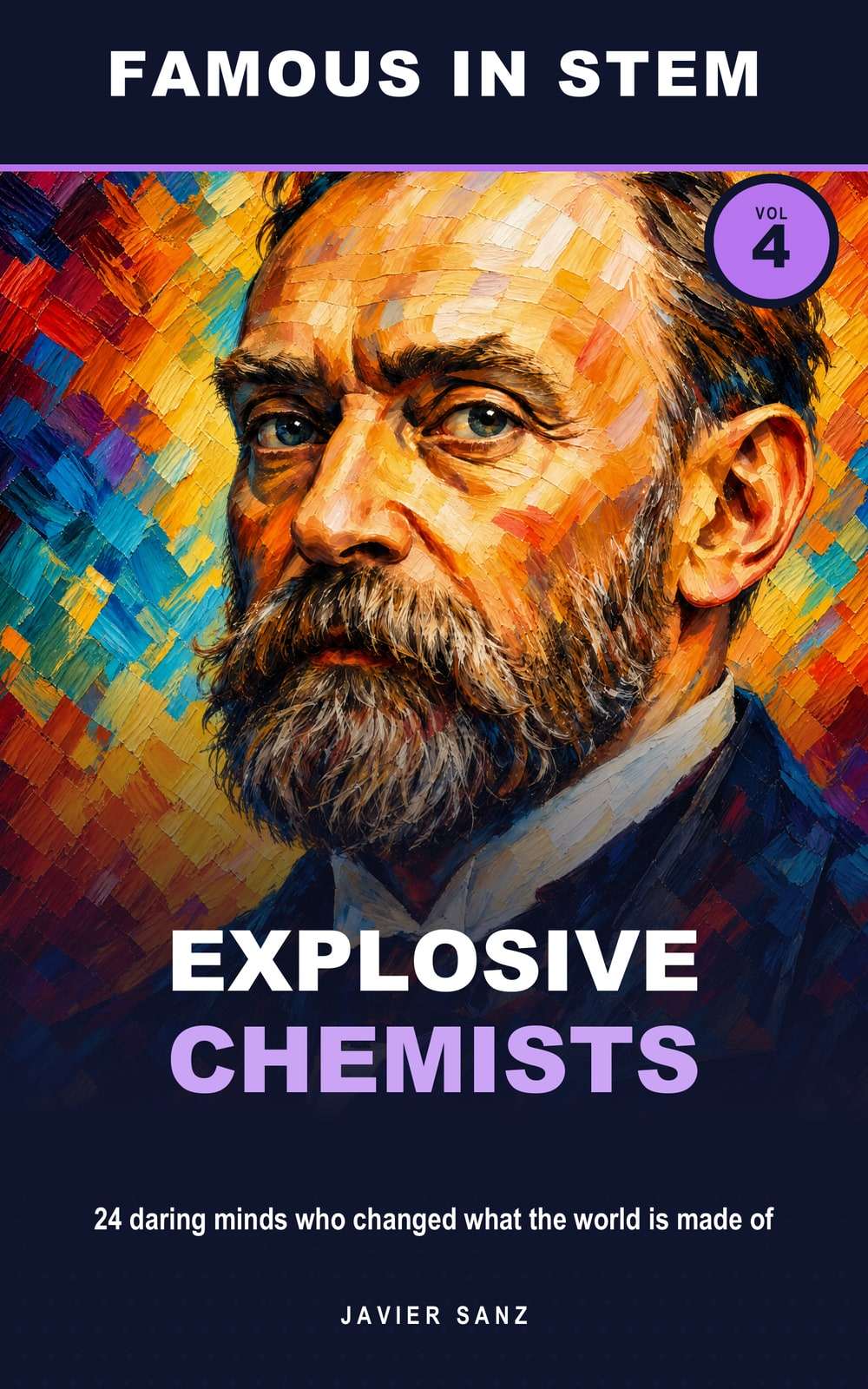
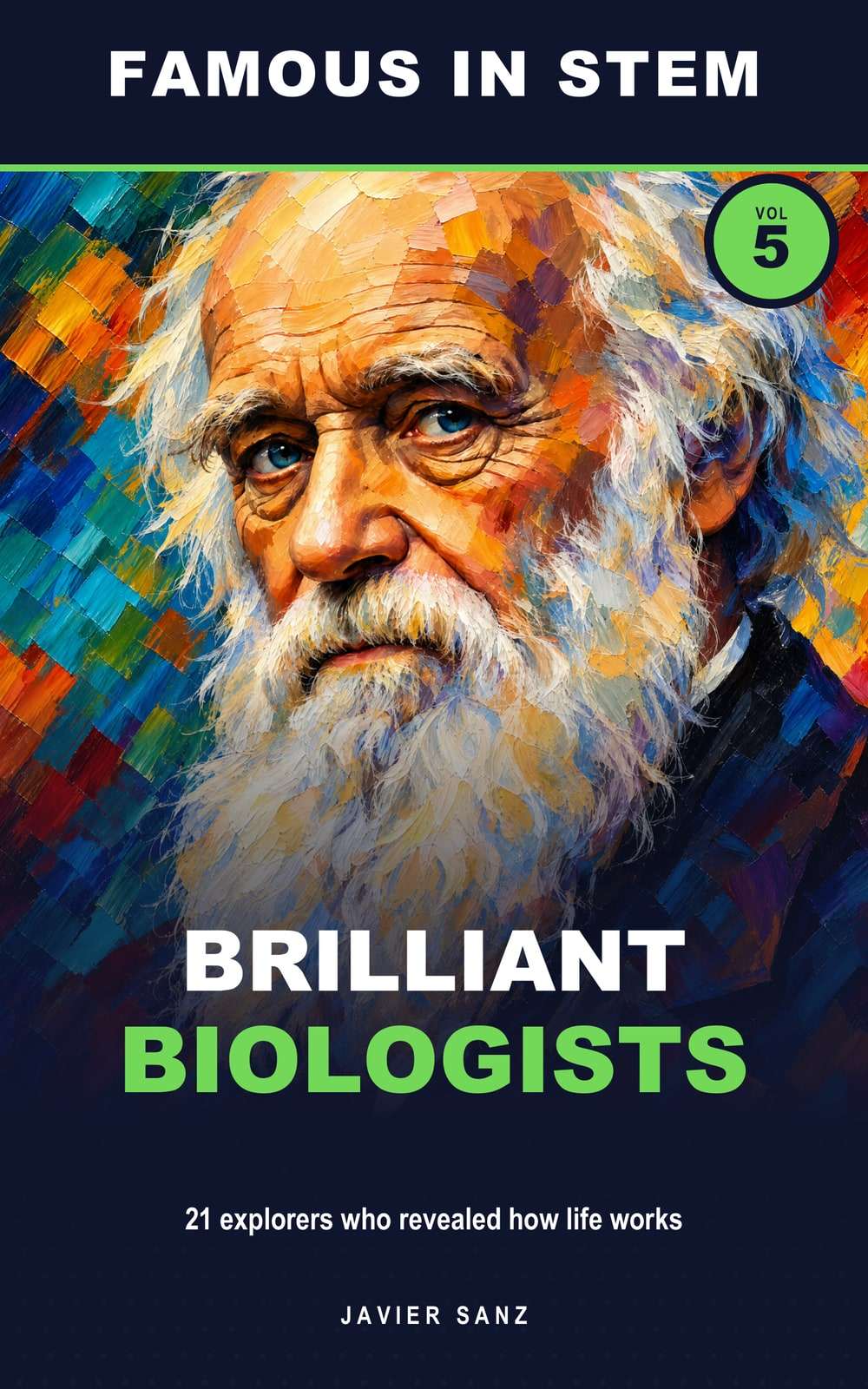
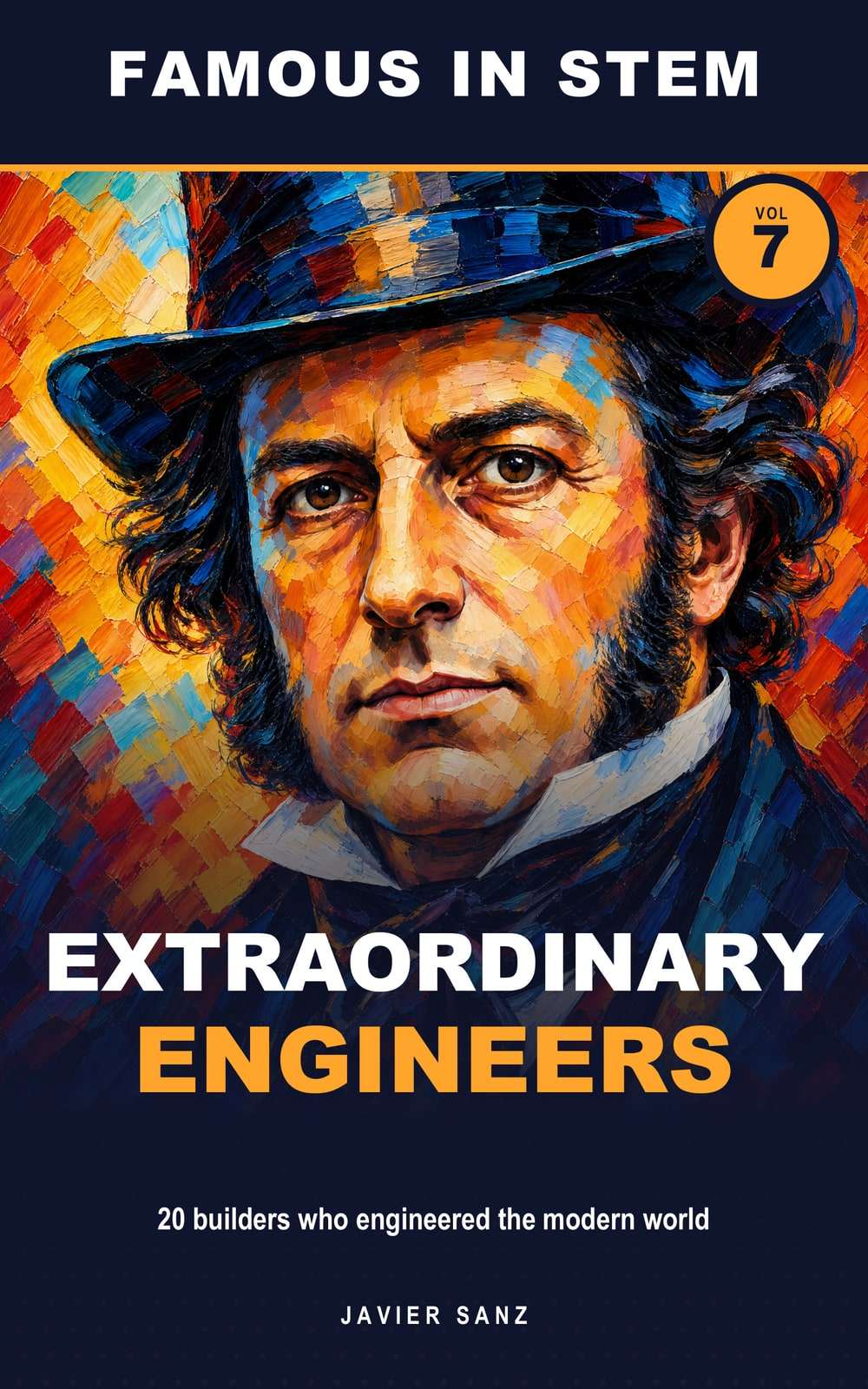
Cover of Famous in STEM, Vol. 2: Mathematical Masterminds by Javier Sanz, showing a painted portrait of Katherine Johnson

Famous in STEM · Volume 2

Mathematical Masterminds

23 minds who found the patterns behind everything

A boy who, the story goes, added up the numbers from 1 to 100 in a flash. A code-breaker racing the clock every midnight at Bletchley Park. A clerk in India whose letter of formulas astonished Cambridge. The mathematician John Glenn asked to check the computer’s numbers before he flew. Mathematical Masterminds tells the true stories of 23 people who found the patterns behind everything, from Pythagoras and Euclid to Terence Tao.

Also see all formats on Amazon, including hardcover where available.

  • 23 chapters
  • Ages 13+
  • Read in any order
  • 2026 edition
  • By Javier Sanz

About this book

Code-breaking, infinity, prime numbers and flight paths to orbit, told through the people who found the patterns.

Every chapter explains one beautiful idea in plain words, with no exam pressure: why some infinities are bigger than others, how a computer counts in ones and zeros, how two shadows measured the Earth. Many chapters end with a puzzle or a trick to try with a pencil.

I had one wish for this book: that somewhere in these pages you would stop, pick up a pencil and check something for yourself.

From “Before you start,” the book’s introduction

Who’s inside

All 23 mathematicians

Each chapter title and big idea, exactly as they appear in the book.

  1. Carl Friedrich Gauss

    1777–1855

    The schoolboy who, the story goes, found the shortcut through a hundred numbers

    Big ideaBefore you start the arithmetic, look for the pattern underneath it.

  2. Blaise Pascal

    1623–1662

    The young man who put the weight of the air to the test

    Big ideaChance can be counted, and a column of air can be weighed.

  3. Alan Turing

    1912–1954

    He imagined the computer before anyone could build one

    Big ideaOne machine can do any calculation, if you feed it the right instructions.

  4. Leonhard Euler

    1707–1783

    The nearly blind man who worked out almost half his mathematics in his head

    Big ideaCorners minus edges plus faces equals 2, for every flat-faced solid without holes.

  5. Paul Erdős

    1913–1996

    The mathematician who lived out of a suitcase

    Big ideaMathematics is done best in company, so go where the problems are.

  6. Eratosthenes

    c. 276–194 BC

    He measured the Earth with a well and a stick

    Big ideaTwo shadows, about 800 kilometers apart, are enough to measure a planet.

  7. Pythagoras

    c. 570–495 BC

    The theorem is real; the man is mostly fog

    Big ideaIn a right-angled triangle, the squares on the two short sides add up to the square on the long one.

  8. Fibonacci

    c. 1170–after 1240

    The customs official’s son who taught Europe to count with zero

    Big ideaTen symbols and the idea of place value can handle any number there is.

  9. Euclid

    c. 325–265 BC

    The textbook that lasted two thousand years

    Big ideaStart from a few plain truths and prove everything else, step by step.

  10. Girolamo Cardano

    1501–1576

    The gambling doctor who wrote down an impossible number

    Big ideaChance obeys arithmetic, and so, it turns out, does the square root of a negative number.

  11. Srinivasa Ramanujan

    1887–1920

    The clerk who mailed a hundred theorems to Cambridge

    Big ideaSome people can see what numbers are doing before anyone can prove it.

  12. Pierre-Simon Laplace

    1749–1827

    He worked out the odds that the Sun will rise tomorrow

    Big ideaProbability is common sense turned into arithmetic.

  13. Bernhard Riemann

    1826–1866

    The shy pastor’s son who bent space

    Big ideaSpace itself can curve, differently in different places, and we can measure it from inside.

  14. Pierre de Fermat

    1601 or 1607–1665

    The judge whose margin riddle lasted more than 350 years

    Big ideaTwo squares can add up to a square; two cubes never add up to a cube.

  15. Katherine Johnson

    1918–2020

    The astronaut would not fly until she had checked the numbers

    Big ideaOnce the engine stops, a spacecraft is a thrown stone, and a thrown stone can be calculated.

  16. Henri Poincaré

    1854–1912

    He found the limits of prediction, and had to pay for the printing

    Big ideaThree bodies pulling on each other can move in ways no simple formula can predict.

  17. Gottfried Wilhelm Leibniz

    1646–1716

    He wrote every number with 0 and 1

    Big ideaTwo symbols are enough to write any number, and the right symbols make hard thinking easy.

  18. Ada Lovelace

    1815–1852

    The poet’s daughter who saw what a computer could become

    Big ideaA machine that follows instructions can work on anything you can write as symbols, not just numbers.

  19. Terence Tao

    born 1975

    The youngest gold medalist in the history of the Olympiad

    Big ideaAmong the prime numbers, evenly spaced runs of any length you like are waiting to be found.

  20. John Nash

    1928–2015

    A short thesis on how rivals really behave

    Big ideaIn any contest with a limited number of choices, there is a way to play, sometimes by mixing moves at random, where nobody gains by changing alone.

  21. Georg Cantor

    1845–1918

    He counted past infinity, and found more than one

    Big ideaSome infinities are bigger than others, and there is a way to prove it.

  22. John von Neumann

    1903–1957

    He drew the plan that almost every computer still follows

    Big ideaKeep the program in the same memory as the data, and one machine can do any job you can write as a program.

  23. Joseph-Louis Lagrange

    1736–1813

    The quiet man who found the parking places in space

    Big ideaAround any two bodies in orbit there are five points where a third can keep pace with them.

Free sample

Read the opening of Alan Turing’s chapter

The first pages, word for word.

Alan Turing

He imagined the computer before anyone could build one

Lived: 1912–1954

Big idea: One machine can do any calculation, if you feed it the right instructions.

Every day at midnight, German army and air force radio operators reset their Enigma machines to a new secret setting. Every message sent that day was scrambled with it. At a country house north of London called Bletchley Park, that meant every morning began at zero. Thousands of messages were pouring in, and the people reading them had until midnight to find the day’s key before the whole puzzle changed again.

The number of possible settings on an army Enigma was about 159 million million million. Trying them one by one was hopeless. What Alan Turing designed in the autumn of 1939 was a machine for not trying them one by one.

The boy on the bicycle

Turing’s father worked in India, and Alan and his brother were raised in England by a retired colonel and his wife. In May 1926, when he was thirteen, a general strike stopped the trains on the day he was due to start at Sherborne School. He got on his bicycle and rode the sixty miles, sleeping at an inn on the way. The local paper reported it.

He was untidy, shy and hopeless at Latin, and he spent his free time on the science and mathematics the school had not asked for. At King’s College, Cambridge, he found people who did not mind. In 1936, aged twenty-three, he wrote the paper that made him.

The chapter goes on. So do 22 more.

From the book

See it, try it, think about it

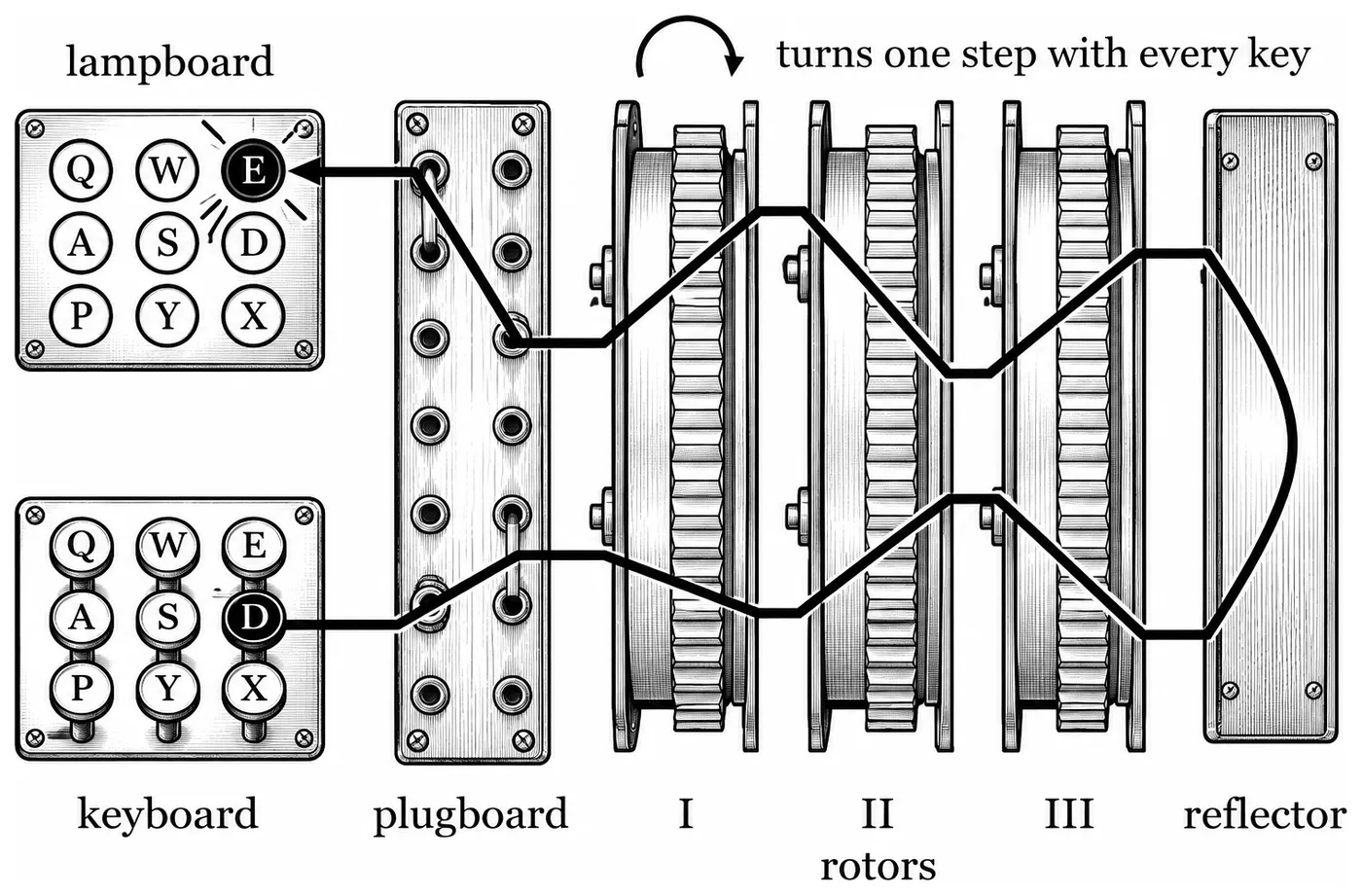
An Enigma machine with its keyboard, lampboard, three rotors and front plugboard labeled
Press a key, a lamp lights. The first rotor turns with every keystroke, the others now and then, so the same letter comes out differently each time.Illustration from the chapter on Alan Turing
Try this

Gauss’s pairing trick works for any run of numbers. Add 1 to 20: pair 1 with 20, 2 with 19 and so on. Ten pairs of 21 make 210. Now do 1 to 1,000. Five hundred pairs of 1,001 make 500,500, and the answer takes longer to say than to find.

Try this

Write your age in binary. Find the largest power of two that fits (1, 2, 4, 8, 16, 32), write a 1, subtract it and repeat; write a 0 for any power you skip. For 13: 8 fits, leaving 5; 4 fits, leaving 1; skip 2; 1 fits. So 13 is 1101. Now count from 1 to 10 in binary. You will get the pattern 1, 10, 11, 100, 101, 110, 111, 1000, 1001, 1010.

Questions

About Mathematical Masterminds

Which mathematicians are in the book?

Carl Friedrich Gauss, Blaise Pascal, Alan Turing, Leonhard Euler, Paul Erdős, Eratosthenes, Pythagoras, Fibonacci, Euclid, Girolamo Cardano, Srinivasa Ramanujan, Pierre-Simon Laplace, Bernhard Riemann, Pierre de Fermat, Katherine Johnson, Henri Poincaré, Gottfried Wilhelm Leibniz, Ada Lovelace, Terence Tao, John Nash, Georg Cantor, John von Neumann and Joseph-Louis Lagrange: 23 in all.

Is it good for a teen who says they hate math?

It was written for exactly that reader. The book is about people first: rivalries, wars, prizes and lucky accidents. The math comes in small, clear pieces, often as a puzzle or trick you can try in a minute.

Do I need to read the other Famous in STEM books first?

No. Mathematical Masterminds is Volume 2 of seven, and every volume stands on its own. Each chapter does too, so readers can start with whoever interests them most.

What age is it for?

Readers 13 and up: teens, curious adults and anyone who prefers stories to textbooks. Confident younger readers who love science can read them too: the chapters are short and explain every idea from scratch.

Are the books accurate?

The 2026 editions were rewritten chapter by chapter and fact-checked against published sources. Where an anecdote rests on a single account, the books say so ("the story goes") rather than presenting legend as fact.

More in the series

Six more fields to explore

Start with the field they love.

Seven books, one for each corner of STEM. Every volume stands on its own, so there is no wrong place to begin.

Mathematical MastermindsFamous in STEM · Vol. 2
Buy on Amazon