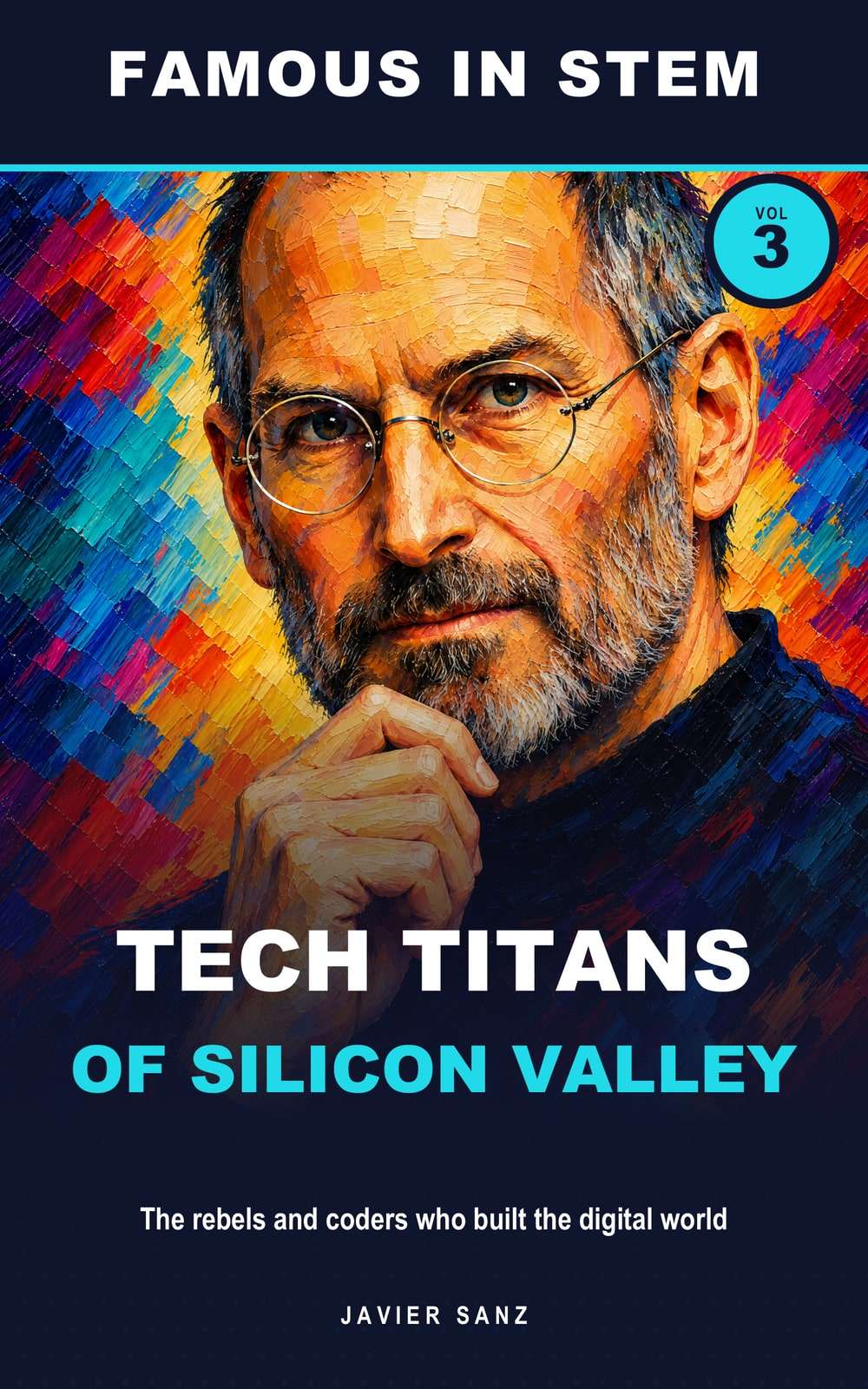
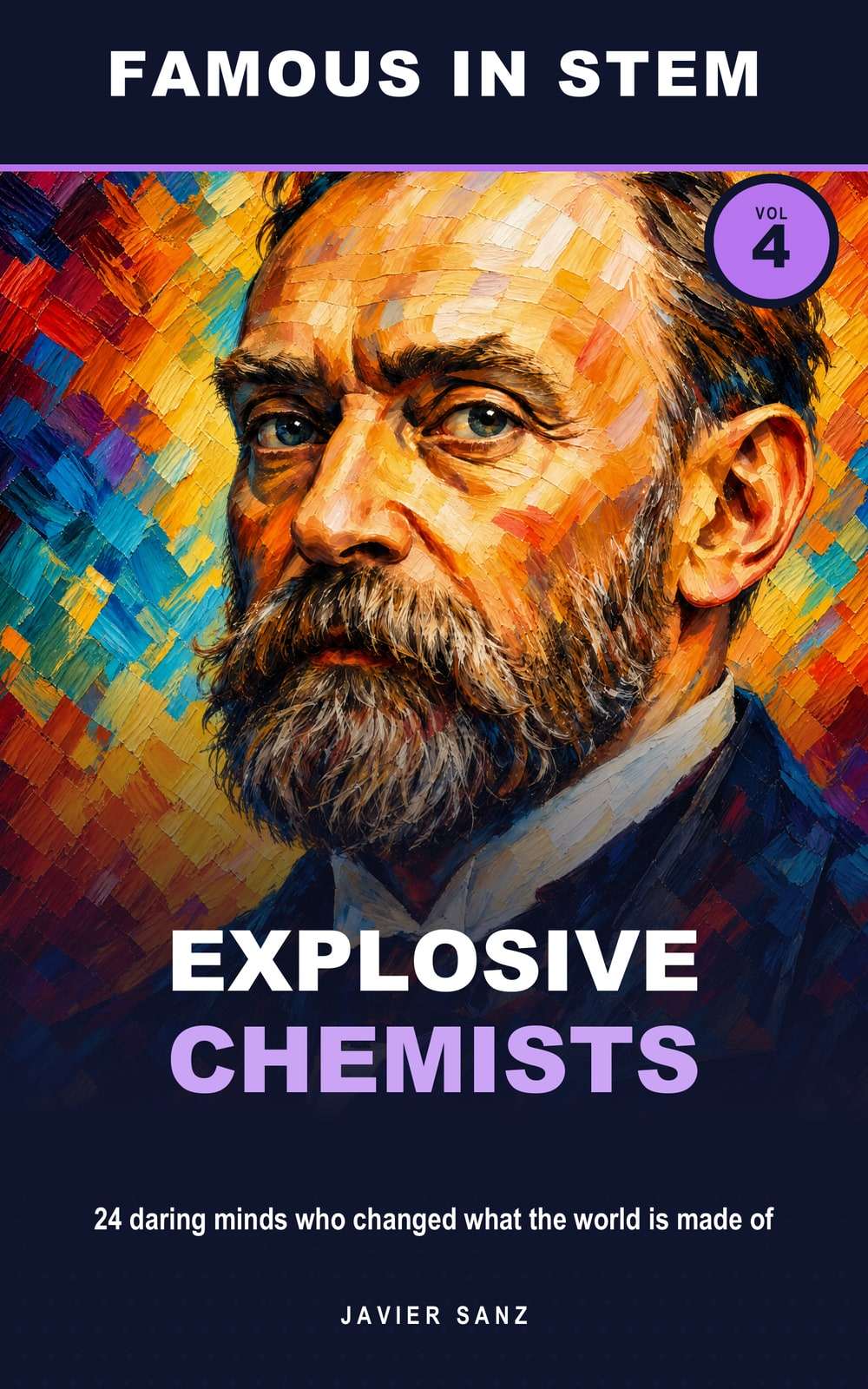
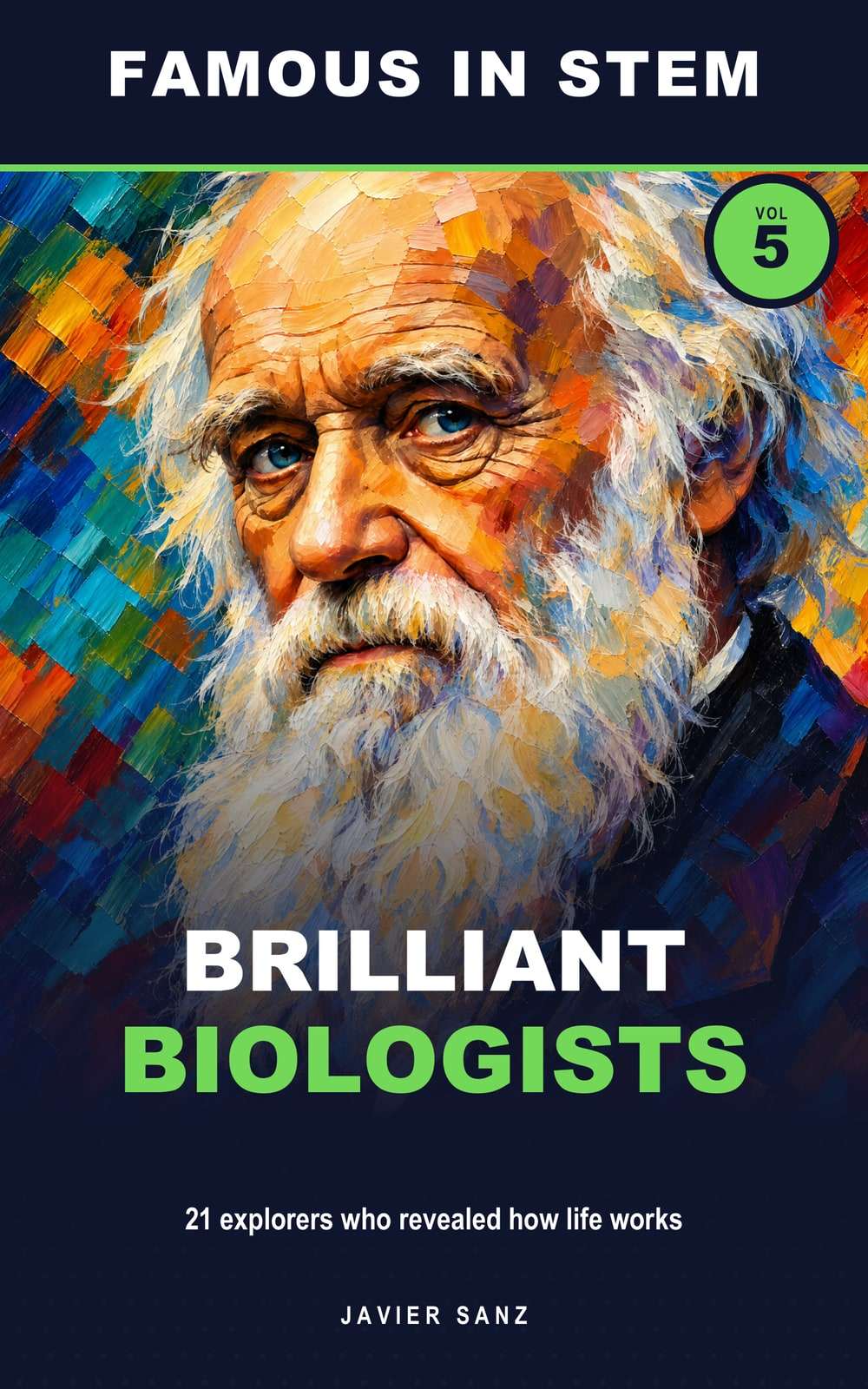
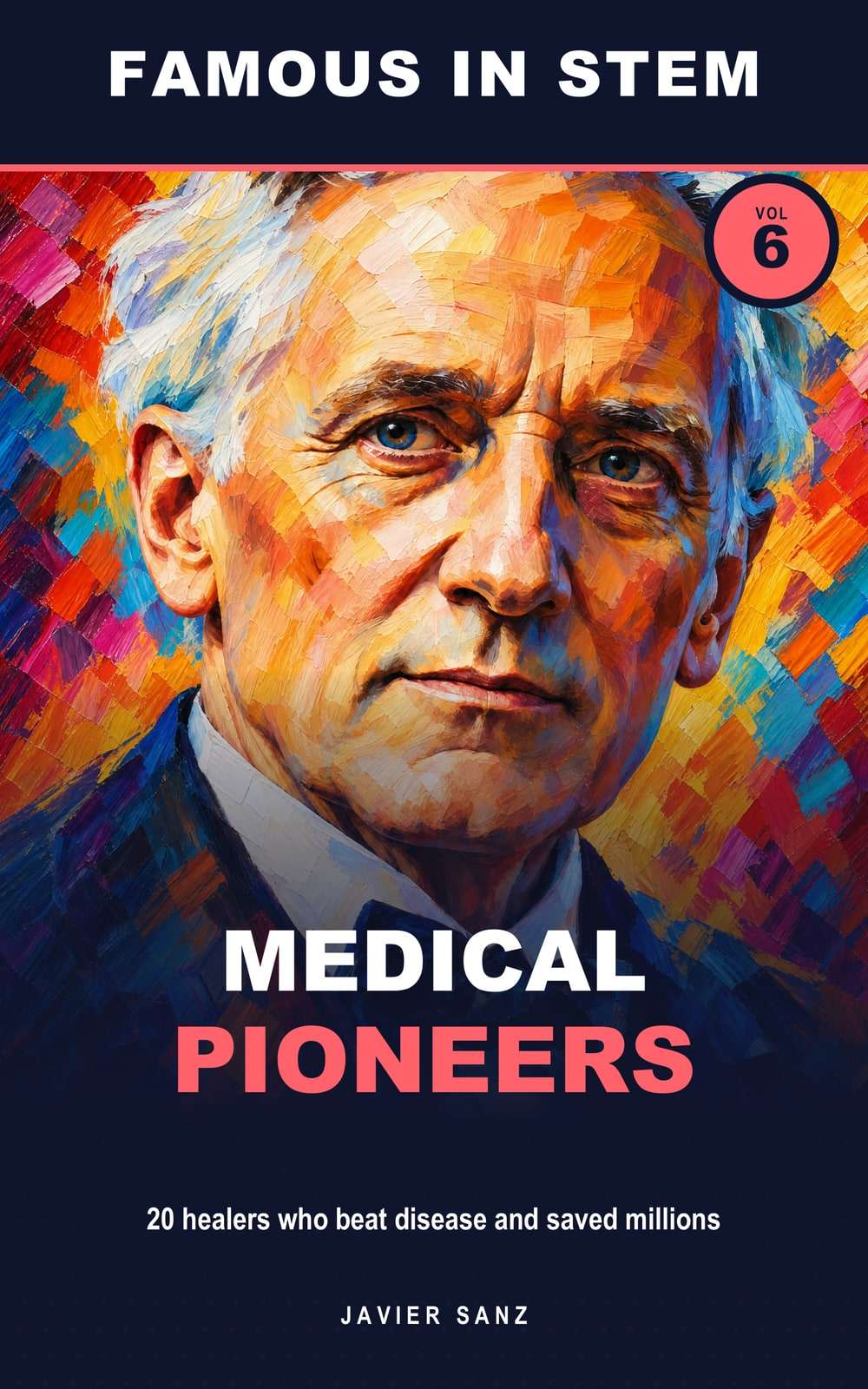
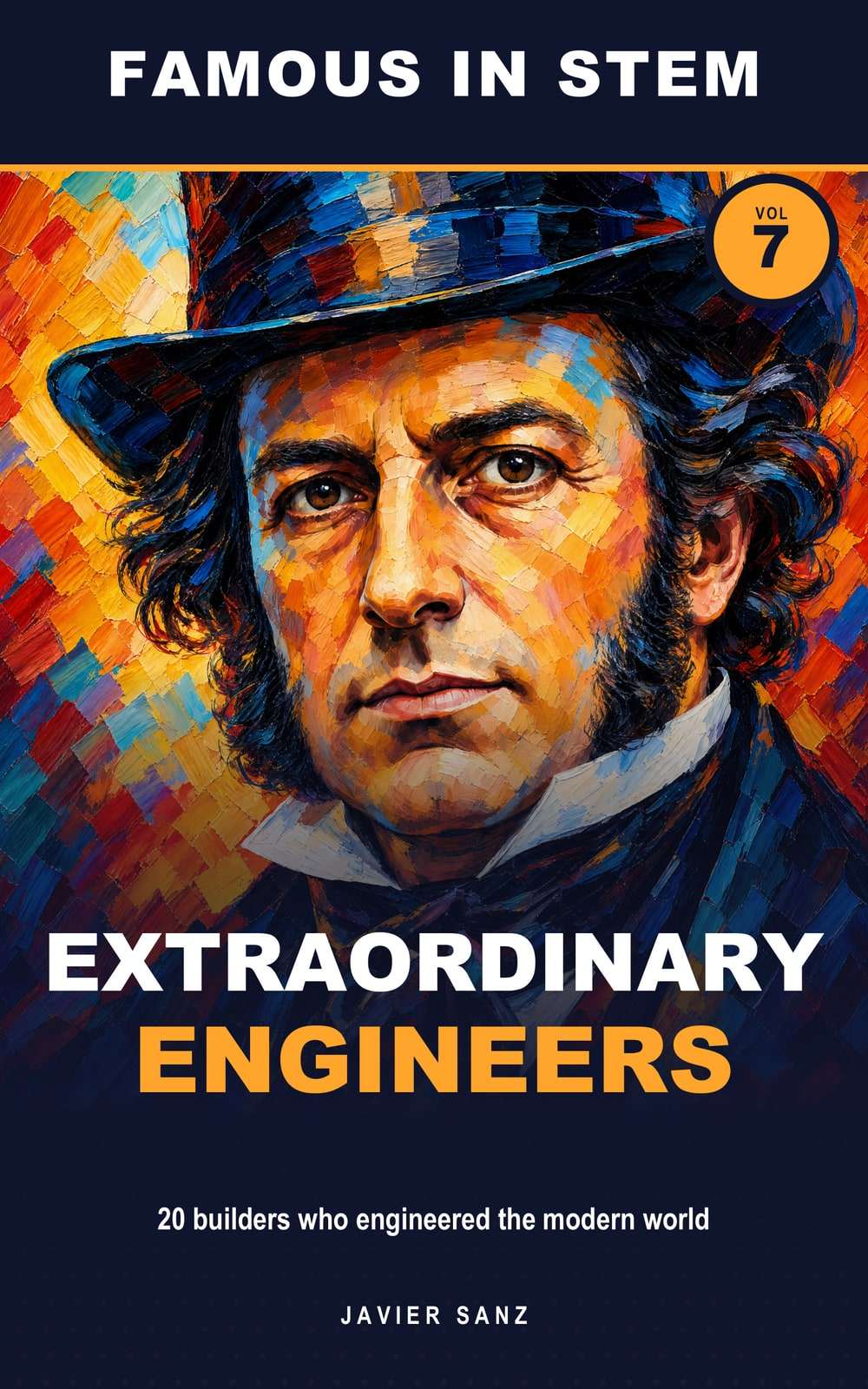
Cover of Famous in STEM, Vol. 3: Tech Titans of Silicon Valley by Javier Sanz, showing a painted portrait of Steve Jobs

Famous in STEM · Volume 3

Tech Titans of Silicon Valley

The rebels and coders who built the digital world

A computer that stopped working because of a moth. A student’s “just a hobby” operating system that now runs most of the servers behind the internet. A rocket that came back down and landed standing up. Tech Titans of Silicon Valley tells the true stories of the rebels and coders who built the digital world, from Grace Hopper and Gordon Moore to the founders of Apple, Microsoft, Google, Amazon and Wikipedia.

Also see all formats on Amazon, including hardcover where available.

  • 25 chapters, 27 people
  • Ages 13+
  • Read in any order
  • 2026 edition
  • By Javier Sanz

About this book

The chip, the internet, the web and the companies built on them, told through the rebels and coders who made them.

Each chapter explains the idea underneath the fame in plain words: what a compiler does, how packets cross the internet, why a link works like a vote, how a web page reaches your screen. Try-this boxes turn the ideas into quick experiments on any phone or laptop.

The phone in your pocket has more computing power than NASA had when it sent people to the Moon. The twenty-seven people in this book (four of them worked in pairs) are a large part of the reason. Almost none of them set out to change the world. Most set out to make one thing work: a disk controller with fewer chips, a shortest route between two Dutch cities, a way to pass notes around a dentist’s office.

From “Before you start,” the book’s introduction

Who’s inside

All 27 tech pioneers, in 25 chapters

Each chapter title and big idea, exactly as they appear in the book.

  1. Steve Jobs

    1955–2011

    The college dropout who made computers friendly

    Big ideaA computer should fit the person, not the other way around.

  2. Bill Gates

    born 1955

    The teenager who decided software was worth money

    Big ideaSoftware is a product in its own right, sold separately from the machine it runs on.

  3. Steve Wozniak

    born 1950

    The engineer who did it with fewer chips

    Big ideaLet the processor do the work and the machine needs fewer parts. Code is almost free to copy, so it often costs less than hardware.

  4. Mark Zuckerberg

    born 1984

    The sophomore who drew a map of who knows whom

    Big ideaWrite down who is friends with whom, and the map itself becomes the product.

  5. Kevin Mitnick

    1963–2023

    The hacker who talked his way in

    Big ideaThe weakest part of any computer system is a person who trusts a stranger.

  6. Linus Torvalds

    born 1969

    The student whose hobby now runs most internet servers

    Big ideaGive away the core of an operating system and let thousands of strangers improve it with you.

  7. Tim Berners-Lee

    born 1955

    The software engineer who gave the Web away

    Big ideaGive every document on every computer an address, a way to fetch it and a way to link it to others.

  8. Grace Hopper

    1906–1992

    The admiral who taught computers English

    Big ideaLet people write instructions in words, and let a program turn the words into the machine’s numbers.

  9. Gordon Moore

    1929–2023

    The chemist who predicted fifty years of computing with one graph

    Big ideaThe number of transistors on a chip doubles every couple of years, and has for half a century.

  10. Robert Noyce

    1927–1990

    The minister’s son who printed a circuit on a chip

    Big ideaMake all the parts of a circuit in one piece of silicon and print the wires on top, the way you print a page.

  11. Bob Kahn and Vint Cerf

    born 1938 and 1943

    Two engineers who taught networks to talk to each other

    Big ideaCut every message into numbered packets, let each one find its own way and reassemble them at the far end.

  12. Edsger Dijkstra

    1930–2002

    The twenty-minute café idea behind how maps find routes

    Big ideaTo find the shortest route, always settle the nearest place you have not yet settled.

  13. Jack Dorsey

    born 1976

    The boy with the scanner who shrank a message to 140 characters

    Big ideaA public message short enough to fit in a text, sent to everyone who chooses to listen.

  14. Peter Thiel

    born 1967

    The chess player who moved money by infrared

    Big ideaPaying online is changing two numbers in a ledger. The hard part is proving who asked.

  15. Elon Musk

    born 1971

    The man who decided rockets should land

    Big ideaA rocket that flies back and lands can be used again, and a car can run on a floor full of batteries.

  16. Marc Andreessen

    born 1971

    The student who put pictures on the Web

    Big ideaA browser that shows images beside the words, and that ordinary people could download and use.

  17. Shawn Fanning

    born 1980

    The freshman whose music program emptied the record shops

    Big ideaKeep one list of who has which file, and let people’s computers trade directly with each other.

  18. James Gosling

    born 1955

    The programmer who built an imaginary computer

    Big ideaCompile a program once, for a machine that does not exist, and let every real machine pretend to be it.

  19. Guido van Rossum

    born 1956

    The Christmas hobby that became one of the world’s most popular languages

    Big ideaA programming language should read like the writing of a clear thinker, with nothing in the way.

  20. Michael Dell

    born 1965

    The pre-med student who built computers to order in his dorm

    Big ideaBuild each computer only after someone has ordered it, from standard parts that all fit together.

  21. Richard Stallman

    born 1953

    The programmer who would not sign the agreement

    Big ideaSoftware should come with the freedom to study, change and share it, and a license can make that freedom stick.

  22. Jeff Bezos

    born 1964

    The bookseller who started renting out his computers

    Big ideaComputing can be rented by the hour over the internet, like electricity, instead of bought by the box.

  23. Larry Page and Sergey Brin

    both born 1973

    Two graduate students who let the Web vote on itself

    Big ideaA link from one page to another is a vote, and votes from important pages count more.

  24. Jimmy Wales

    born 1966

    The options trader who let everyone edit the encyclopedia

    Big ideaLet anyone change any page, keep every version, and trust the crowd to fix mistakes faster than it makes them.

  25. Larry Ellison

    born 1944

    The dropout who sold IBM’s idea before IBM did

    Big ideaKeep information in tables, link them by shared columns, and ask for what you want in a language that reads a little like English.

Free sample

Read the opening of Steve Jobs’s chapter

The first pages, word for word.

Steve Jobs

The college dropout who made computers friendly

Lived: 1955–2011

Big idea: A computer should fit the person, not the other way around.

On January 24, 1984, a 28-year-old in a bow tie walked onto a stage in Cupertino, California, and lifted a small beige box out of a cloth bag. He slid in a floppy disk. The box drew pictures on its screen, then spoke in a flat robot voice. It said it sure was great to get out of that bag.

Many computers in 1984 showed green letters on a black screen and waited for you to type commands you had to memorize. The Macintosh showed a desk: little pictures of folders and documents, and an arrow you moved with a mouse. You pointed at what you wanted. Steve Jobs did not invent any of that. What he did, over and over, was decide that ordinary people deserved it, and then push until it shipped.

A garage in Los Altos

Jobs was adopted as a baby by Paul and Clara Jobs. Paul was a machinist who fixed cars and kept a workbench in the family garage, and he gave his son a corner of it. The family lived in Mountain View until Jobs was in middle school, then moved to Los Altos, orchard country that was turning into Silicon Valley.

Jobs liked to tell a story about being about twelve and needing parts for a frequency counter. He looked up Bill Hewlett, the co-founder of Hewlett-Packard, in the phone book and called him at home. Hewlett laughed, talked with him, sent the parts and offered him a summer job on an assembly line. Whether or not every detail is exact, the habit was real: Jobs asked for things other people assumed they could not have.

The chapter goes on. So do 24 more.

From the book

See it, try it, think about it

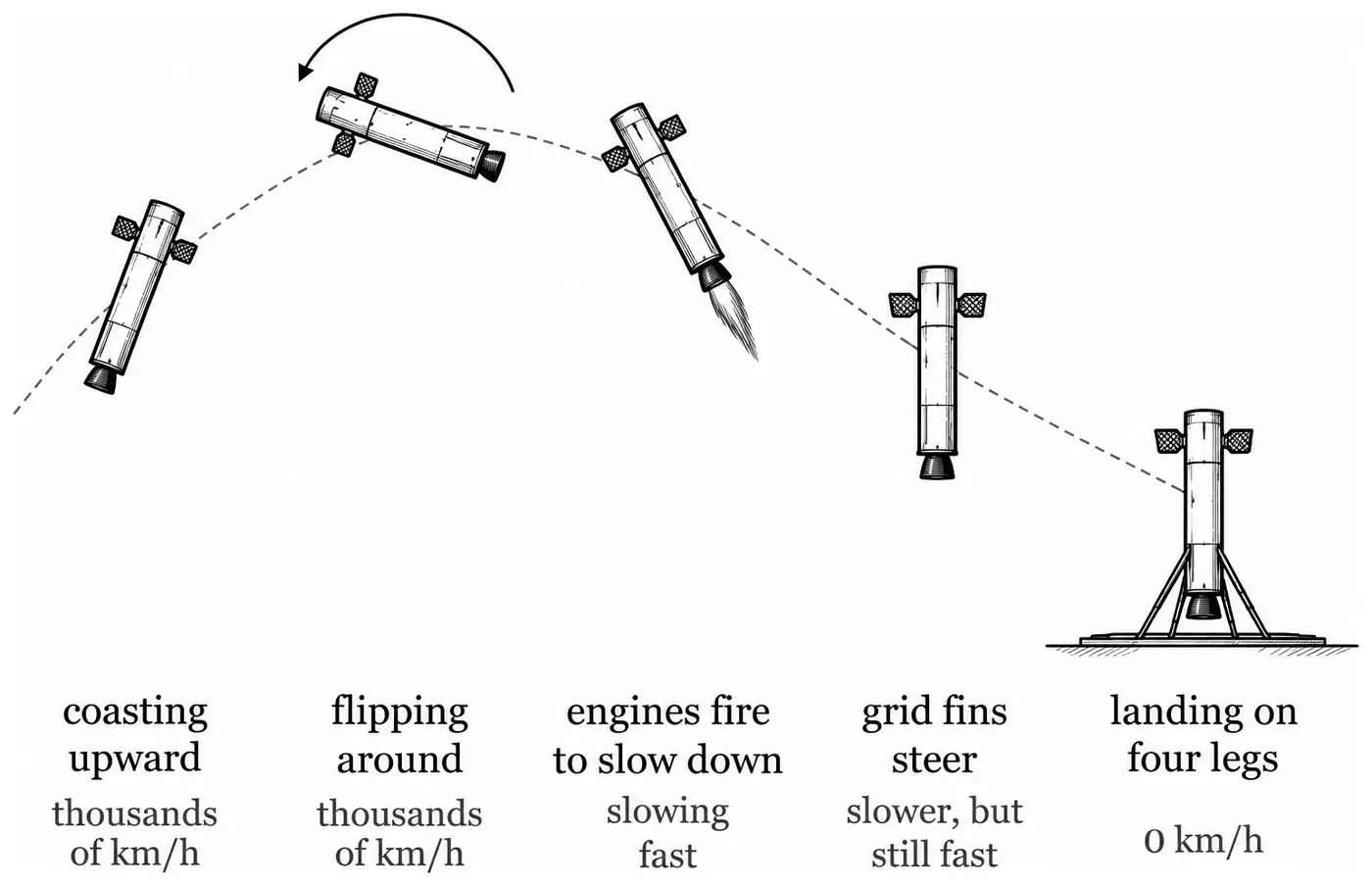
A Falcon 9 first stage drawn at five moments after separation: coasting upward, flipping around, firing engines to slow down, steering with grid fins through the air, and landing on four legs. Beside each moment, a small speed figure falling from thousands of kilometers per hour to zero
The stage must arrive at zero speed and zero height at the same instant. It cannot hover.Illustration from the chapter on Elon Musk
Try this

In most browsers you can right-click any page and choose “View page source.” What appears is the HTML the server sent: the same kind of tags Berners-Lee designed in 1990, with more than thirty years of additions. Find the words you were just reading, hidden among the angle brackets.

Try this

Make up a four-word password out of a dictionary with your eyes shut, pointing at pages. Then notice how easy it is to remember as a tiny story, and how hopeless it would be to guess. Never tell it to anyone who calls you. Real technicians never need your password; they can reset it.

Questions

About Tech Titans of Silicon Valley

Who is in the book?

Steve Jobs, Bill Gates, Steve Wozniak, Mark Zuckerberg, Kevin Mitnick, Linus Torvalds, Tim Berners-Lee, Grace Hopper, Gordon Moore, Robert Noyce, Bob Kahn and Vint Cerf, Edsger Dijkstra, Jack Dorsey, Peter Thiel, Elon Musk, Marc Andreessen, Shawn Fanning, James Gosling, Guido van Rossum, Michael Dell, Richard Stallman, Jeff Bezos, Larry Page and Sergey Brin, Jimmy Wales and Larry Ellison: 27 people in 25 chapters.

Is it a business book?

No. It is a book about ideas and the people who had them. Each chapter explains one piece of computing (a compiler, a database, a search ranking, an operating system) through the story of how it was invented.

Do I need to read the other Famous in STEM books first?

No. Tech Titans of Silicon Valley is Volume 3 of seven, and every volume stands on its own. Each chapter does too, so readers can start with whoever interests them most.

What age is it for?

Readers 13 and up: teens, curious adults and anyone who prefers stories to textbooks. Confident younger readers who love science can read them too: the chapters are short and explain every idea from scratch.

Are the books accurate?

The 2026 editions were rewritten chapter by chapter and fact-checked against published sources. Where an anecdote rests on a single account, the books say so ("the story goes") rather than presenting legend as fact.

More in the series

Six more fields to explore

Start with the field they love.

Seven books, one for each corner of STEM. Every volume stands on its own, so there is no wrong place to begin.

Tech Titans of Silicon ValleyFamous in STEM · Vol. 3
Buy on Amazon