Famous in STEM
Biography projects
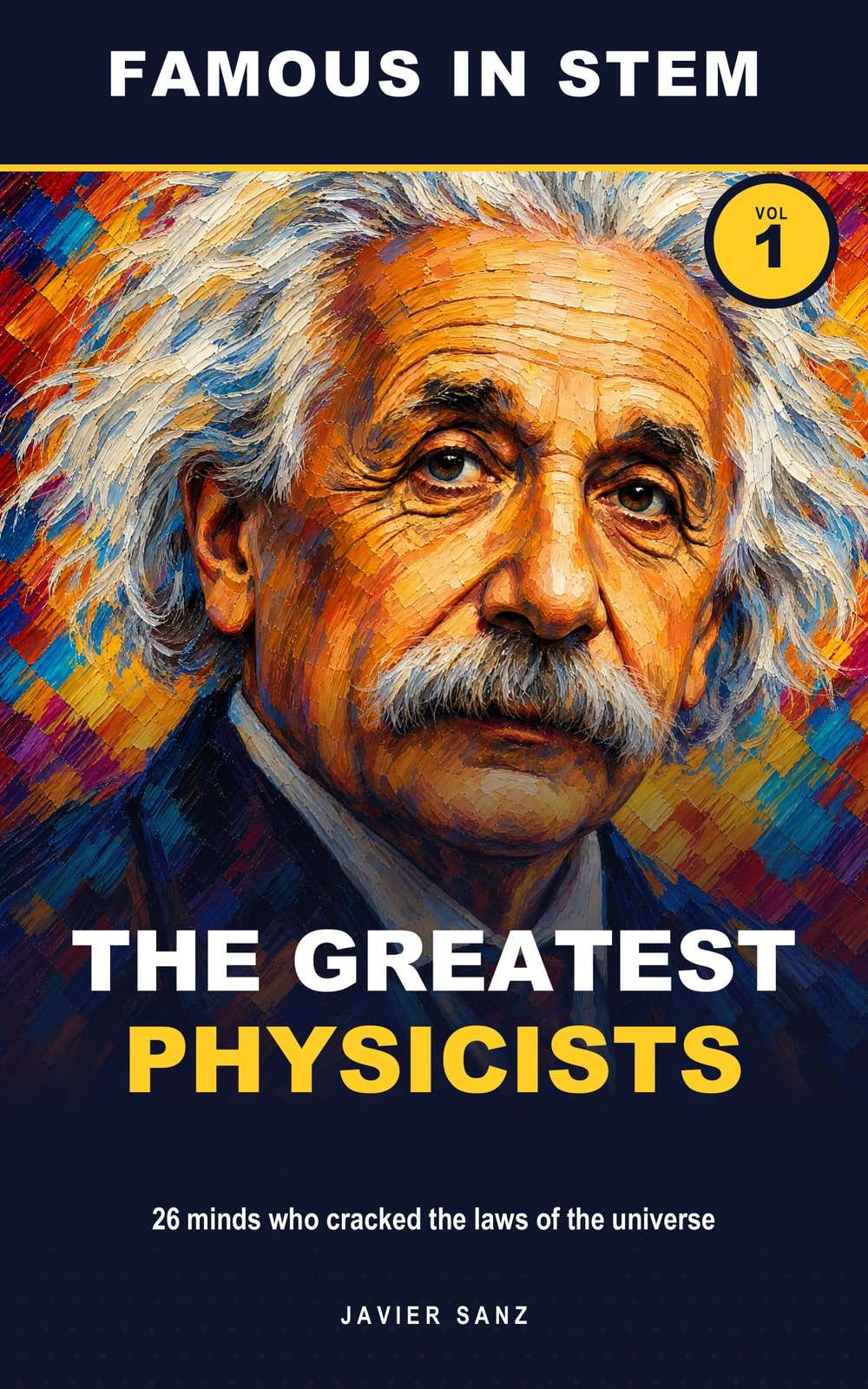
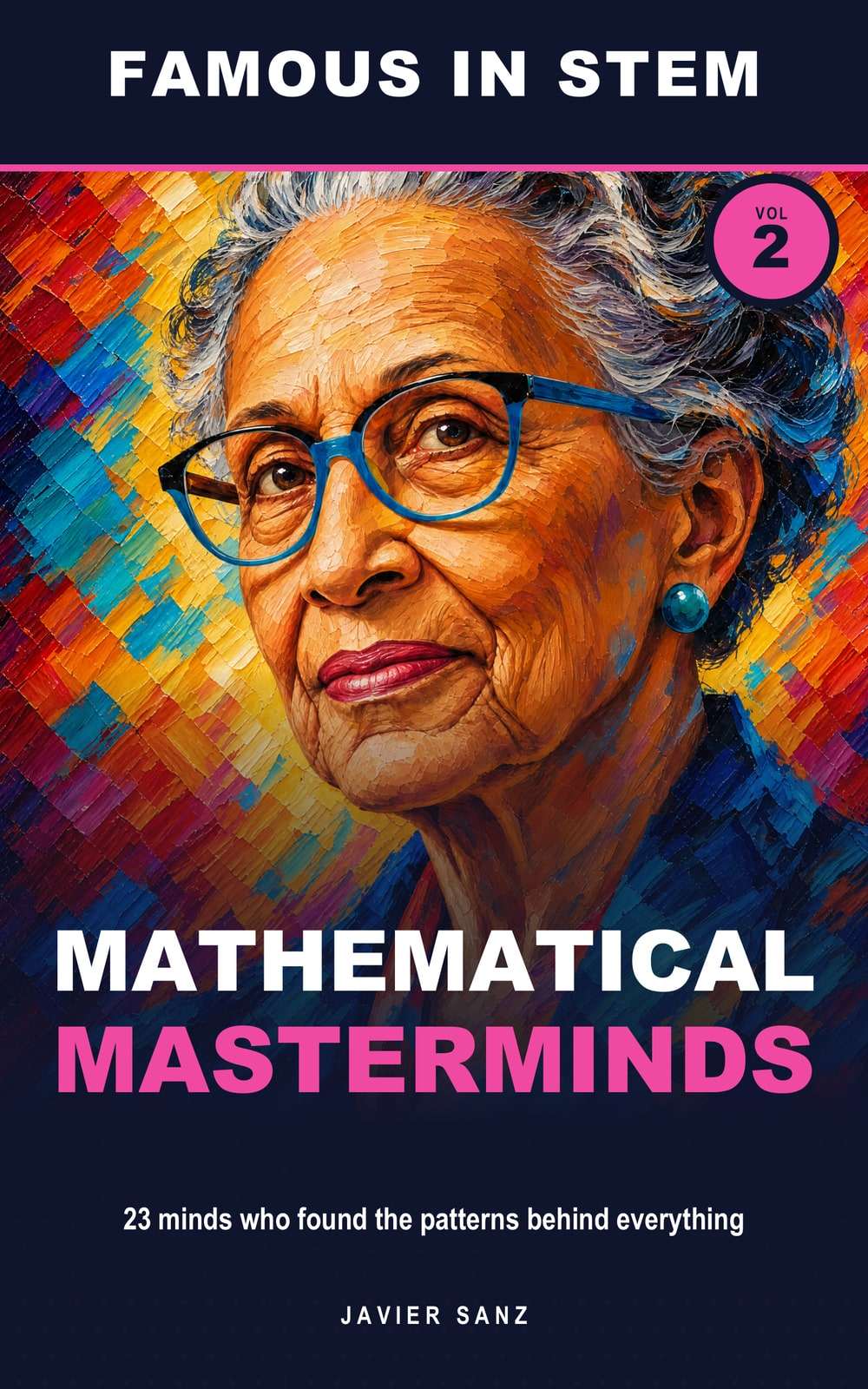
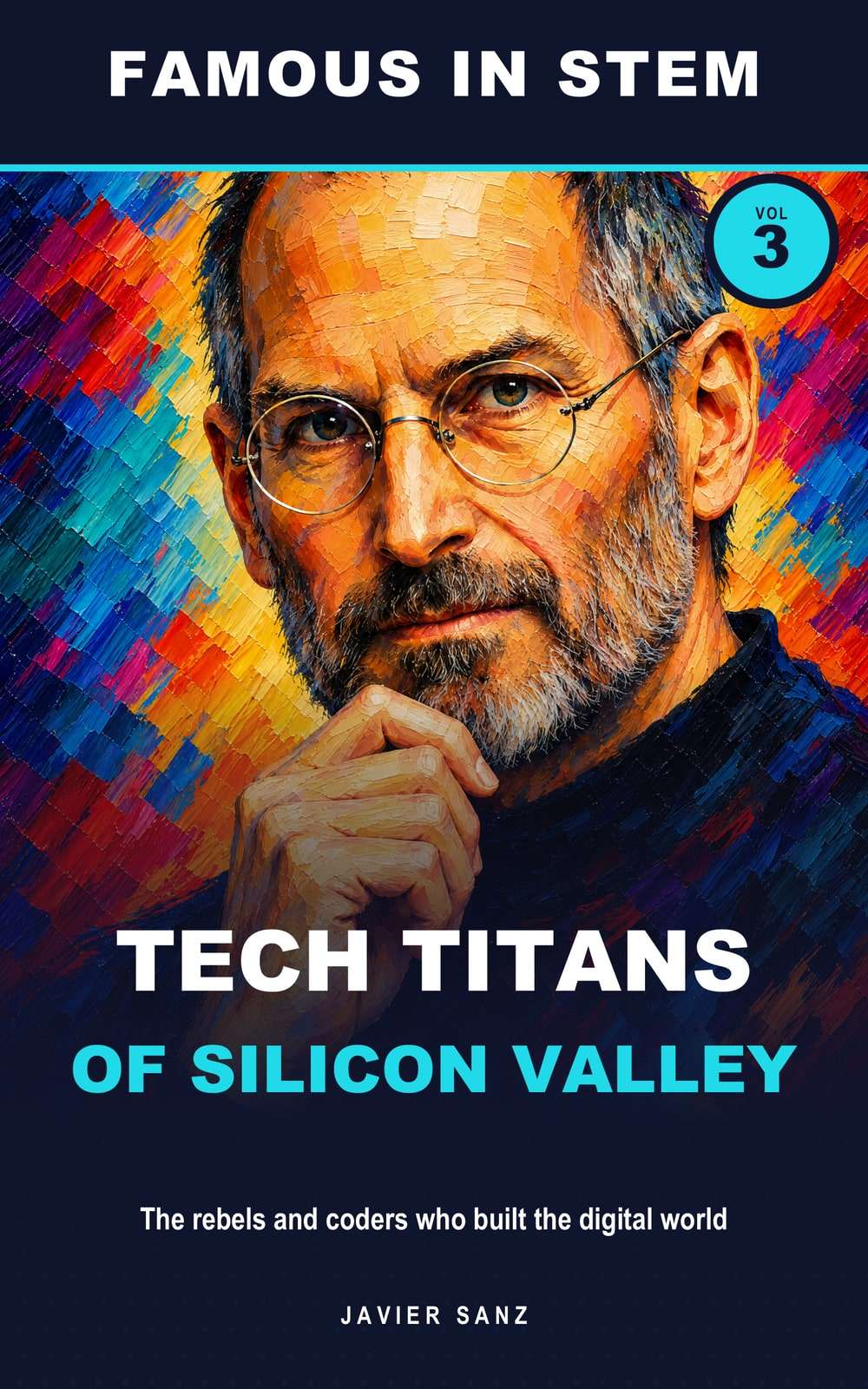
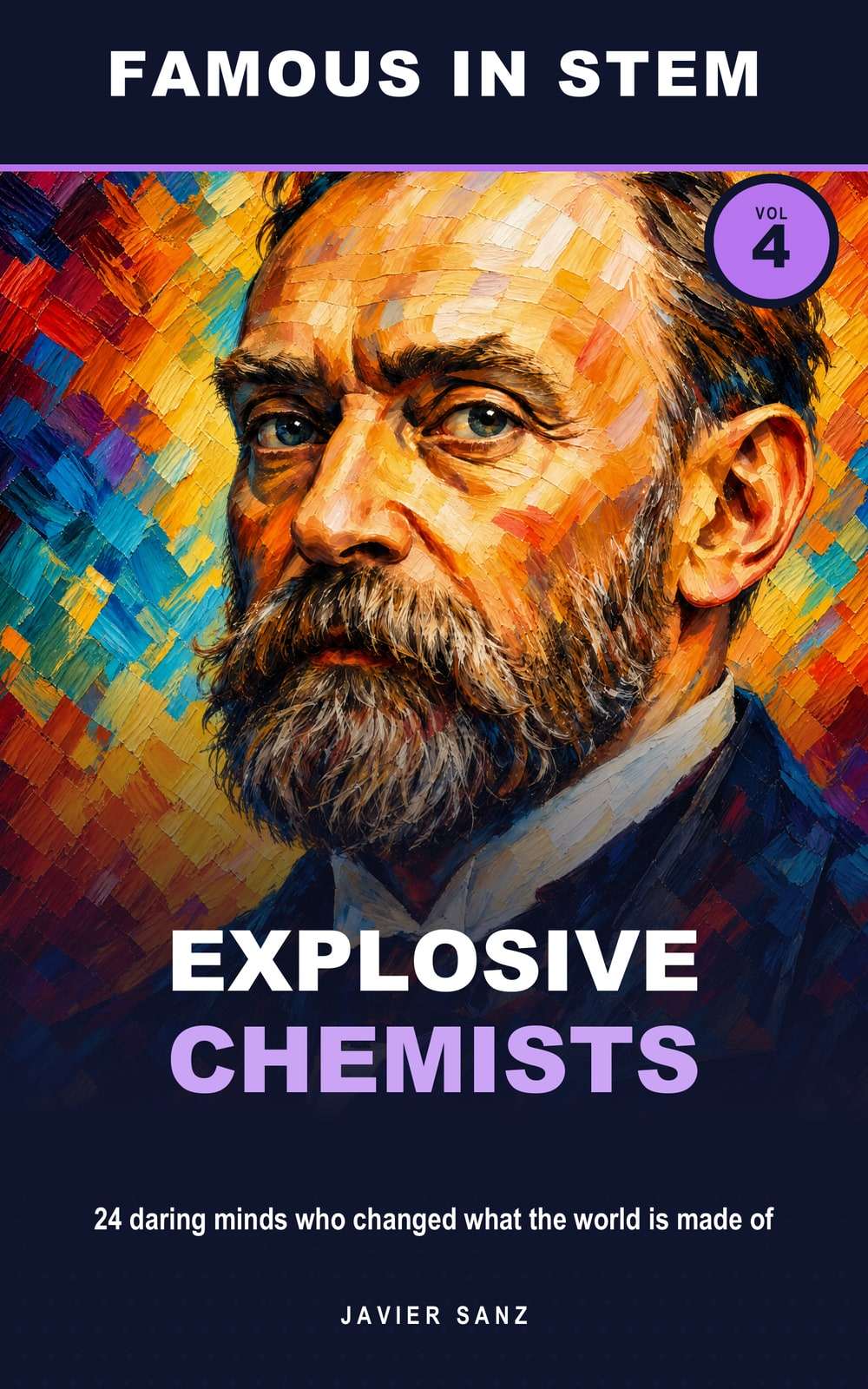
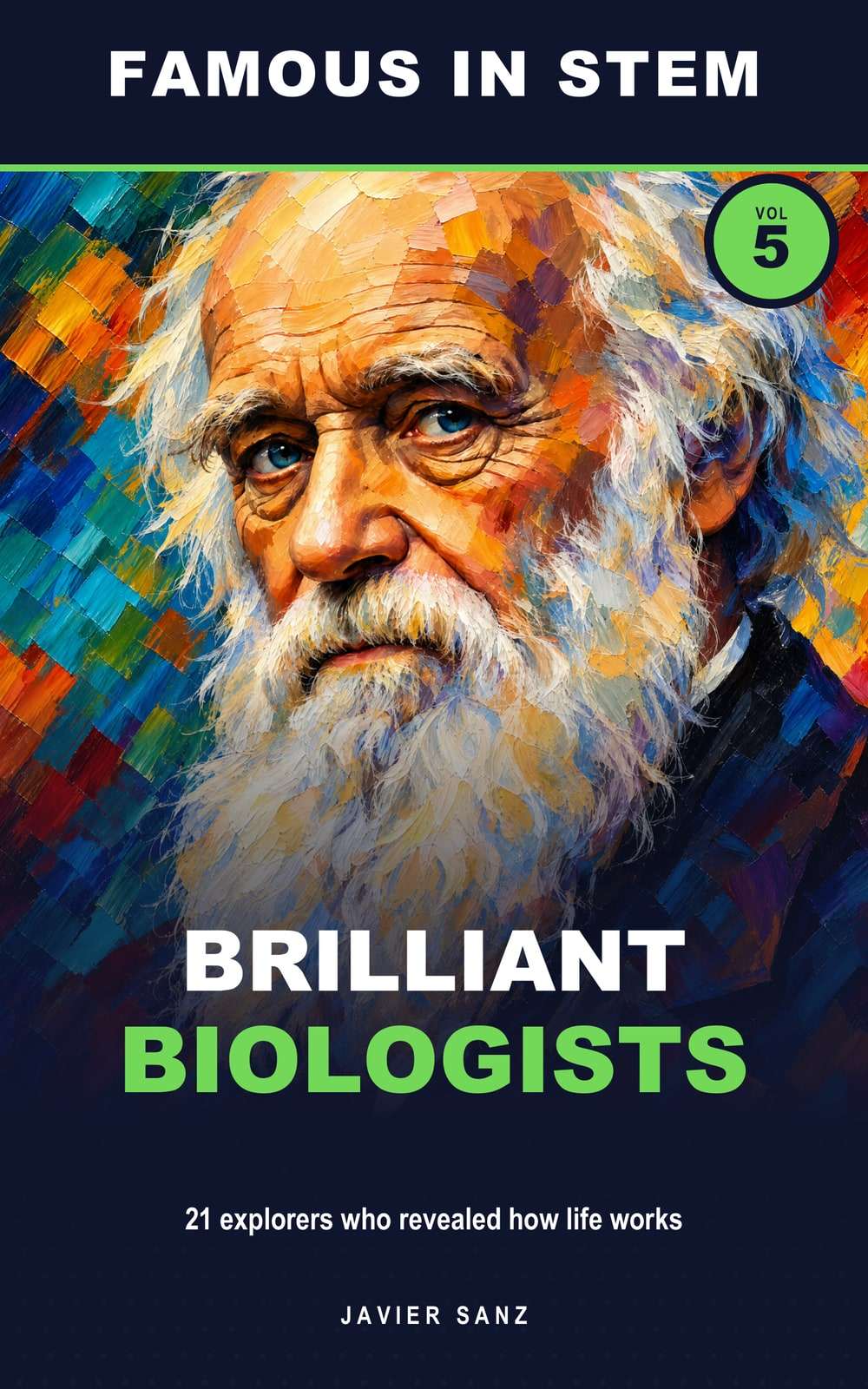
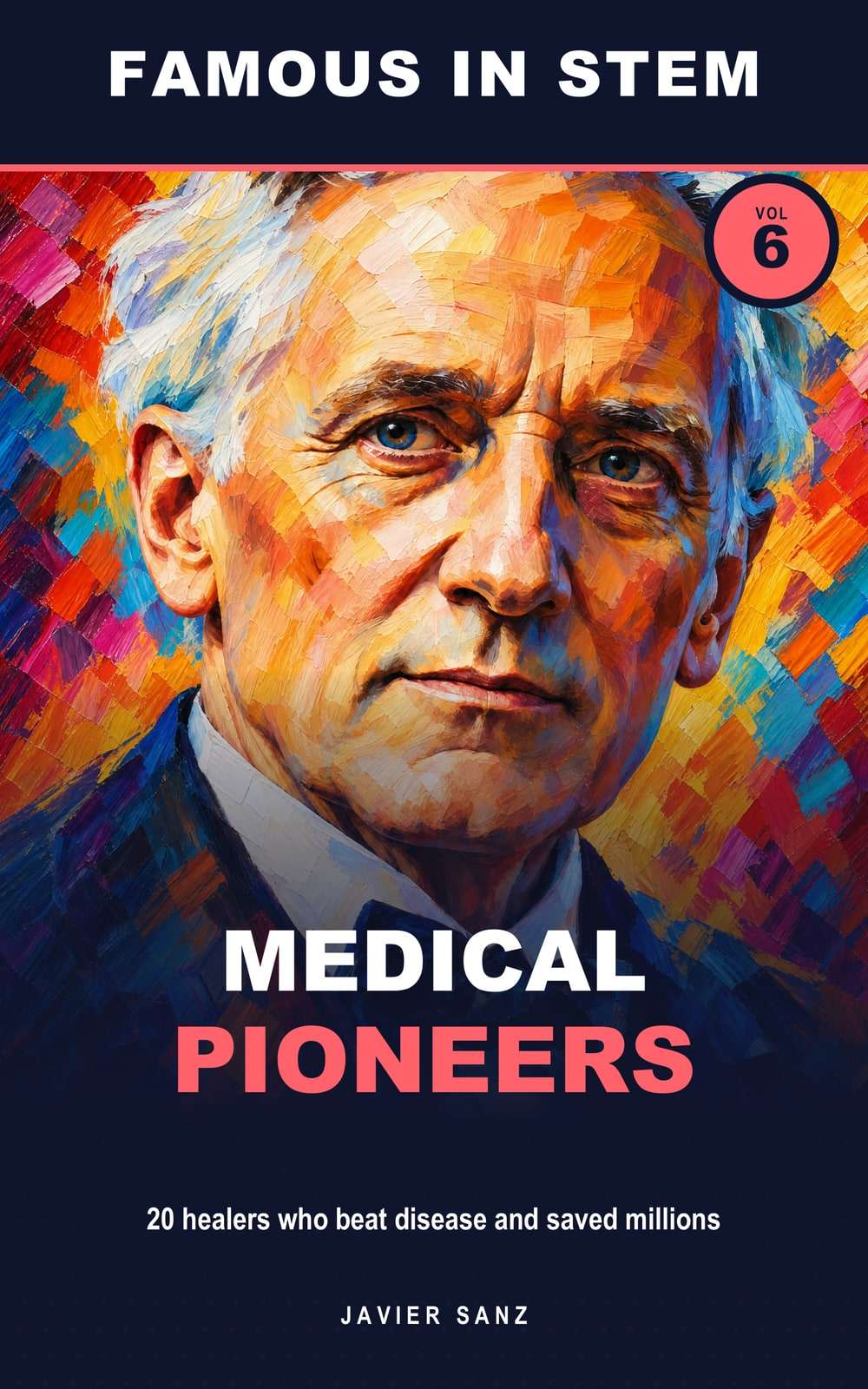
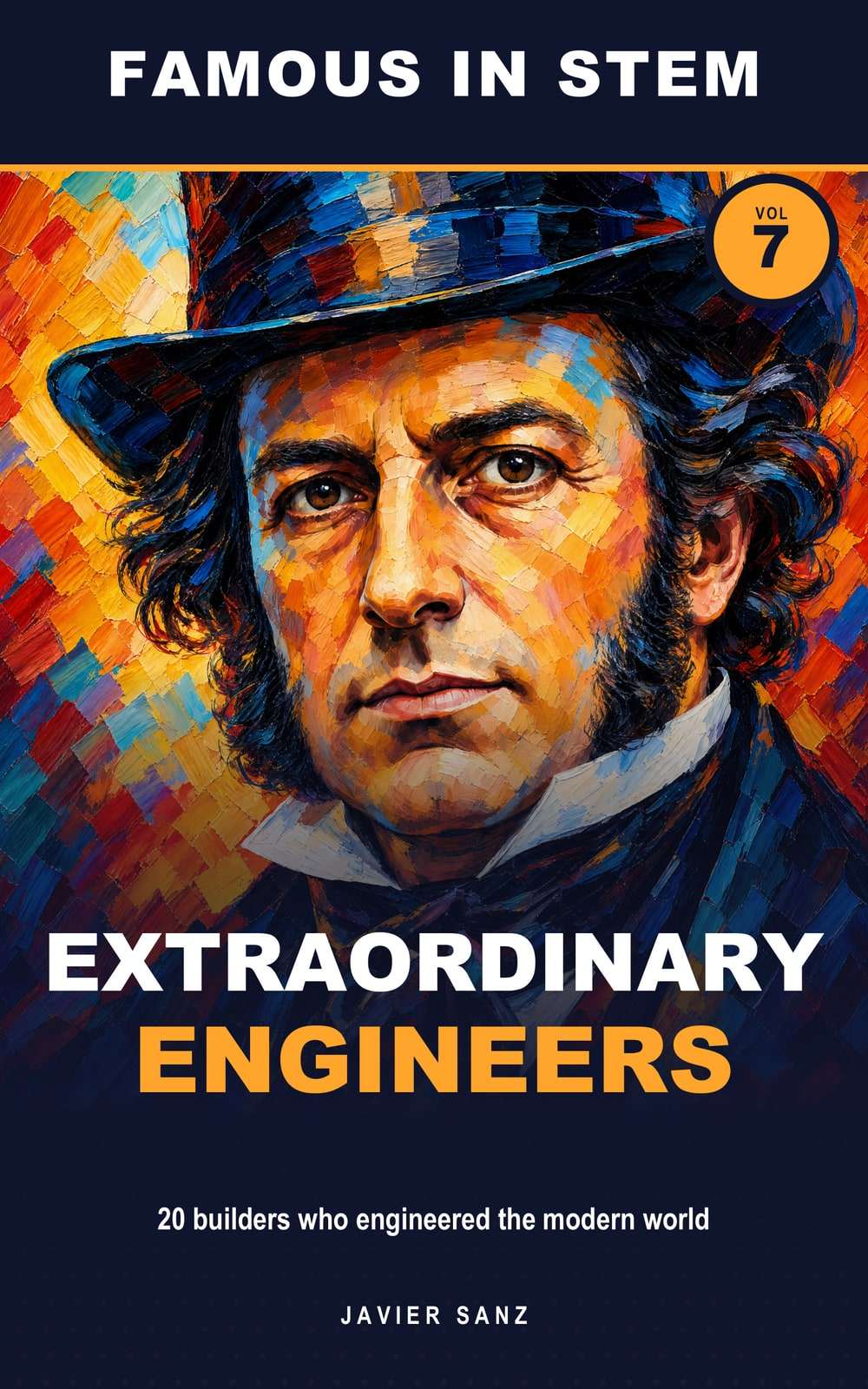
Let students choose from all 161 people, filtered by field. Each chapter gives the dates, the big idea and a story to build a report or presentation on.
For teachers and homeschool
One person per chapter, with dates, a big idea in a sentence, a true story and an activity. Here is how the books fit into lessons, projects and discussions.
Let students choose from all 161 people, filtered by field. Each chapter gives the dates, the big idea and a story to build a report or presentation on.
“Try this” and “Look around you” boxes turn each idea into a quick experiment or observation with everyday materials.
“Think about it” boxes raise questions with no single right answer: about ethics, scale, risk and what counts as proof.
Each life sits in its history: wars, revolutions, empires and migrations. The series links science with history, geography and ethics.
Hands on
Word for word, as printed. Activities with heat or flame say to do them with an adult.
Hold a strip of paper by one end just below your bottom lip, so that it droops. Blow hard across the top of it. The strip rises toward the horizontal. You have made a wing out of paper. The air bends to follow the curve of the paper, and air flowing around a bend presses less on the inside of it, so the still air below pushes the strip up.
Find a wind turbine, a hand-crank flashlight or a bicycle light that works without batteries. Inside each one, a magnet or electromagnet moves past a coil, the same trick Faraday used on his bench in 1831. What has changed in two centuries is mostly the size and the power.
Gauss’s pairing trick works for any run of numbers. Add 1 to 20: pair 1 with 20, 2 with 19 and so on. Ten pairs of 21 make 210. Now do 1 to 1,000. Five hundred pairs of 1,001 make 500,500, and the answer takes longer to say than to find.
Write your age in binary. Find the largest power of two that fits (1, 2, 4, 8, 16, 32), write a 1, subtract it and repeat; write a 0 for any power you skip. For 13: 8 fits, leaving 5; 4 fits, leaving 1; skip 2; 1 fits. So 13 is 1101. Now count from 1 to 10 in binary. You will get the pattern 1, 10, 11, 100, 101, 110, 111, 1000, 1001, 1010.
In most browsers you can right-click any page and choose “View page source.” What appears is the HTML the server sent: the same kind of tags Berners-Lee designed in 1990, with more than thirty years of additions. Find the words you were just reading, hidden among the angle brackets.
Make up a four-word password out of a dictionary with your eyes shut, pointing at pages. Then notice how easy it is to remember as a tiny story, and how hopeless it would be to guess. Never tell it to anyone who calls you. Real technicians never need your password; they can reset it.
Red cabbage does the same trick in your kitchen. Chop a few leaves, soak them in hot water for ten minutes and pour the purple liquid into three glasses. Add lemon juice to one and it turns pink; add a spoon of baking soda to another and it turns blue or blue-green. The third is your control. You have made an indicator, and it works for the same reason as Baeyer’s.
Kevlar is the yellowish fiber inside puncture-resistant bicycle tires, firefighters’ gloves, canoe hulls, racing sails, some phone charging cables and the vests worn by police officers. If an adult cuts open an old, unplugged charging cable and finds stringy yellow fibers, they are probably Kevlar or a close cousin of it.
Take two coins. Heads is Y, tails is y. Flip both together; that is one seed. Two tails means a green seed. Do it 40 times and keep a tally. You should get about 10 greens, and the rest yellow. Mendel did the same thing, except his coins were pea plants and he flipped them 8,000 times.
Dog breeds show selection at work with a human doing the choosing, which biologists call artificial selection. Every Great Dane and every Chihuahua descends from wolves, shaped by people picking which puppies to keep. Darwin began his book with domestic plants and animals, pigeons above all, for the same reason. If people can do this in thousands of years, nature has had millions of years.
Find your pulse at your wrist and count the beats in one minute. Each beat pushes out about 70 milliliters of blood, roughly a third of a cup. Multiply: a pulse of 70 moves about 5 liters a minute, which is all the blood an adult has. Your blood makes a complete circuit in a minute or less, and your heart pumps something like 7,000 liters a day.
Doctors remember the five checks with the letters of her name. Appearance (color), Pulse (heart rate), Grimace (does the baby react to a poke or a tickle of the nose), Activity (muscle tone), Respiration (breathing). Score a healthy newborn: pink body but bluish hands, 1; heart over 100 a minute, 2; cries when poked, 2; arms and legs moving, 2; strong cry, 2. Total: 9.
Hold an empty drink can by its ends and try to bend it. Now ask an adult to cut a strip of the same aluminum from another can (the cut edges are sharp, so wear gloves), hold it flat and bend it. Same metal, same thickness. The can resists because its metal is far from the center line of the bend. Many of Khan’s tallest buildings are that can, standing on end.
Blow up a balloon and let it go. The air rushes out the back and the balloon shoots forward, in a vacuum or not. Now sit on a skateboard on a smooth, flat floor and throw a heavy bag of books away from you. You roll the other way. You have just built a rocket, with the bag as exhaust.
Discussion
Women in STEM
From a fossil hunter on the English coast to a Nobel-winning chemist in Beijing.
Questions
They are written for readers 13 and up in plain, direct language: short paragraphs, everyday words, and every technical term explained the first time it appears. Strong younger readers can manage them, and they work as a read-aloud.
A few pages: short enough to read in one sitting or one class period, long enough to cover a person’s life and one real idea.
The 2026 editions were fact-checked chapter by chapter against published sources, and uncertain anecdotes are flagged in the text (“the story goes”). For a report, students should treat a chapter as a starting point and follow up with the sources their teacher requires.
Yes. The series includes 26 women and people from Europe, the Americas, Africa, the Middle East and Asia, across more than 2,500 years, from Pythagoras and Ibn Sina to Tu Youyou and Wangari Maathai.
Seven books, one for each field. Every volume stands on its own, so you can start with the subject you teach.